Physiotherapy and osteopathy in football
Injury prevention and performance improvement
Football is the most widely practised sport on the planet, with more than 270 million players, including 30 million women, which represents approximately 4% of the world’s population.
Although its origins go back to ancient times, modern football was born in the mid-19th century, with the creation of the first professional leagues in the United Kingdom.
This universal sport fascinates millions of people: the 2022 World Cup final in Qatar brought together one billion viewers in front of screens. Players such as Messi, Lamine Yamal, Pedri, Haaland, Mbappé and Vinícius inspire generations of athletes of all ages.
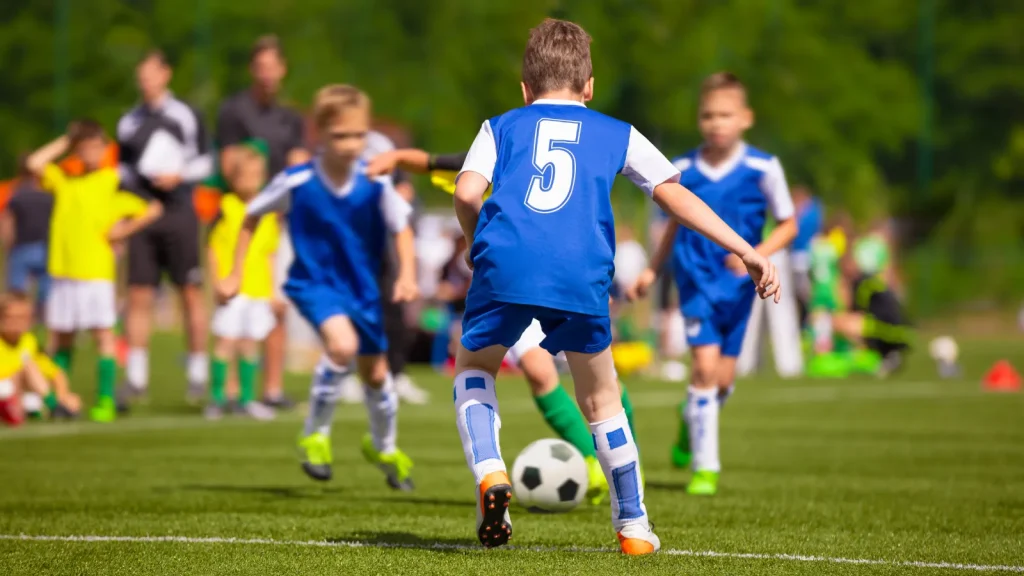
However, behind the passion and technique lies a considerable physical demand. In just 90 minutes, a player can cover between 6 and 11 km and lose up to 2 kg. For this reason, prevention and recovery are essential to keep the body in balance and avoid injuries.
Football injuries: causes, prevention and treatment
Football puts every part of the body to the test. Although technical skill is fundamental, physical contact, falls and sudden changes of direction can cause injuries to muscles, tendons, ligaments or joints.
According to FIFA, injuries occur 12 times more often in matches than in training, due to intensity, fatigue and direct impacts.
For this reason, international organizations recommend implementing body awareness, preventive warm-up and functional strengthening programs from an early age, as well as sanctioning dangerous contact more severely.
Likewise, the quality of the playing surface, appropriate footwear and proper physical preparation are decisive factors in reducing the risk of injury.
Most common signs
Muscle injuries are the most frequent, 41%, including contractures, strains and tears. In almost two-thirds of cases, they affect the hamstrings and, surprisingly, 90% occur without direct contact.
While minor discomfort may resolve with a few days of rest and physiotherapy, a muscle rupture may require several weeks or even surgery.
Ligament injuries account for approximately 21% of cases. Ankle sprains are the most common, followed by anterior cruciate ligament sprains of the knee.
Tendinopathies are also frequent, such as pubalgia or patellar tendinitis, along with direct trauma, such as contusions and hematomas, and bone or joint injuries, such as fractures or subluxations.
Osgood-Schlatter disease in young footballers
Osgood-Schlatter disease mainly affects children and adolescent athletes. It is caused by excessive traction from the quadriceps femoris muscle on the growing tibia, generating inflammation, pain and sometimes a small bone deformity.
Postural imbalance or lack of mobility in the hips and knees can worsen this condition. In these cases, a combined physiotherapy and osteopathy approach helps relieve muscle tension, improve body alignment and prevent recurrence during growth.
How can physiotherapy and osteopathy help?
Both disciplines work in a complementary way to optimize the footballer’s performance, prevent injuries and facilitate fast, complete recovery.
In prevention: balance, mobility and muscle control
During pre-season, both the physiotherapist and the osteopath analyze the body globally to identify possible muscular or joint imbalances.
Sports physiotherapy uses strengthening exercises, stretching and neuromuscular control techniques to improve stability and coordination.
Osteopathy, for its part, works manually on joint mobility restrictions, encouraging smooth, pain-free movement.
The shared goal is to prepare the body for the physical load of training and prevent injuries before they appear.
In recovery: accelerating the return to the field
After an injury, the combination of physiotherapy and osteopathy allows for a more complete and faster recovery.
The physiotherapist guides functional rehabilitation, retraining the muscles, balance and specific strength needed to return to sport safely.
Meanwhile, the osteopath works to restore the body’s global mobility, helping to avoid compensations that could generate new discomfort.
Both professionals work as a team, adapting treatment according to the healing phase and the player’s needs.
Beyond treatment: the footballer’s lifestyle
Sporting success does not depend only on training. Factors such as adequate rest, balanced nutrition, hydration, stress management and active recovery, including massage, cryotherapy or lymphatic drainage, are essential for maintaining performance.
In this sense, physiotherapy and osteopathy do not only treat the body; they also educate the athlete on healthy habits that will help them sustain their physical level throughout the season.
Football, physiotherapy and osteopathy: an alliance for performance
The balance between strength, flexibility and coordination is the basis of football performance. Physiotherapy and osteopathy, by acting on prevention, recovery and global mobility, allow each player to reach their maximum potential without compromising their health.
For this reason, integrating these therapies into the training routine is not a luxury, but an investment in wellbeing and sporting longevity.
At Aliantis Sitges, our multidisciplinary team supports professional and amateur footballers with a personalized approach combining physiotherapy, osteopathy and health education.
Taking care of your body means taking care of your passion: football.
This blog article does not aim to generate new knowledge; it is based on the reading of scientific publications, blog articles and other texts.