
BLOG

April 20, 2026

Heavy legs on the plane

How lymphatic drainage can help you travel with greater lightness

Travelling by plane is often associated with excitement, rest or discovery, but it can also come with very common physical discomforts, especially on long flights. A feeling of heaviness, swollen ankles, inflamed feet, tingling or discomfort in the legs are common symptoms after spending several hours sitting. Swelling of the legs and feet during air travel is frequent and is usually related to prolonged immobility; moving the legs and walking when possible can help reduce it.

For many people, these discomforts are temporary and not serious. However, when there is a prior tendency to fluid retention, heavy legs or circulatory problems, travelling can become much more uncomfortable. There are also situations where it is important to be especially cautious and assess risk factors for thrombosis, which should be discussed with a healthcare professional. The CDC recommends moving the legs frequently during long journeys and consulting a doctor if there are risk factors for blood clots.

In this article, we explain why heavy legs appear on a plane, what role circulation and the lymphatic system play, and how manual lymphatic drainage can form part of a comfort and recovery strategy before or after travelling.
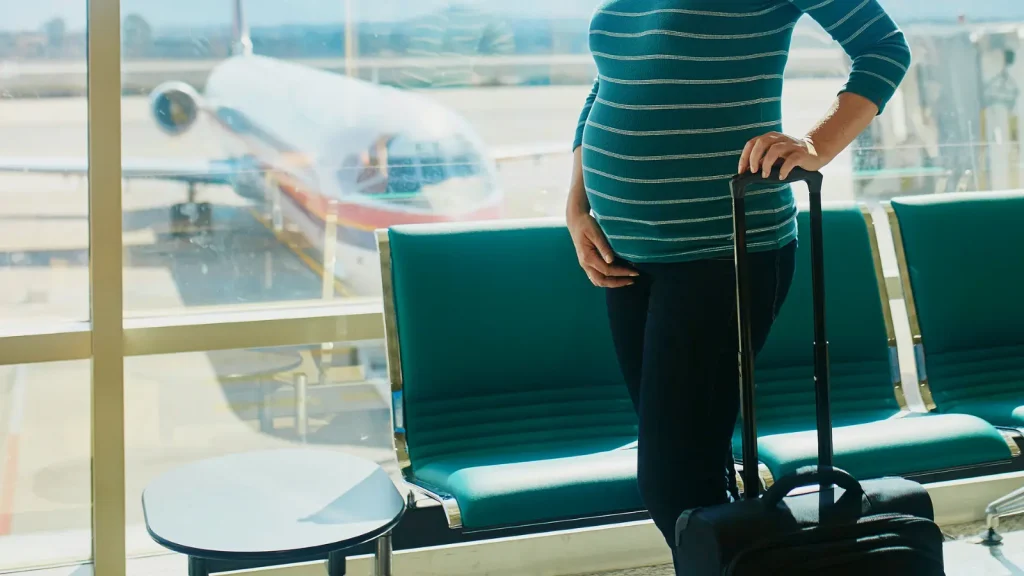
Mujer embarazada esperando un avion

Why do legs feel heavy on the plane?

The feeling of heavy legs during a flight has several causes that combine with each other. It is not only about sitting for a long time, but also about the way the body manages fluids, pressure and circulation in a context of very limited movement.

Immobility and prolonged sitting posture

When we remain seated for hours, the leg muscles stop activating normally. This matters because muscle contraction helps venous return and facilitates the flow of blood back to the heart. If movement decreases, return circulation becomes less efficient and the feeling of heaviness or swelling can increase. Walking along the aisle, flexing the ankles and moving the legs during the journey helps improve blood flow in the legs.

Pressure changes and fluid accumulation

Although the aircraft cabin is pressurized, the pressure is not the same as on the ground. This can promote fluid accumulation in the tissues, especially in the feet and ankles, and increase the feeling of swelling or tightness in the legs. Mayo Clinic notes that swelling of the feet and legs on long flights is common and generally benign, although it can be more noticeable on longer journeys.

Who may notice it more?

Some people are more prone to these discomforts: those who tend to retain fluids, those who already feel heavy legs in daily life, pregnant women or people with certain circulatory risk factors. In these cases, it is advisable to adopt specific preventive measures and, if there is a relevant medical history, to consult before travelling. The CDC indicates that some people at higher risk may benefit from graduated compression stockings, always assessed in context.

What role does the lymphatic system play during travel?

In addition to blood circulation, the lymphatic system participates in fluid balance and in the feeling of congestion or heaviness that can appear after a flight.

How does lymph circulate?

Lymph circulates through a network of vessels that helps drain fluids, collect cellular waste and participate in immune functions. Unlike blood, there is no central “pump” equivalent to the heart. Its movement depends largely on muscle activity, breathing and certain pressure variations in the body.

What happens when we spend many hours sitting?

When we remain immobile for a long time, both venous return and lymphatic circulation can slow down. This reduced dynamic favours the appearance of mild edema, swelling and a feeling of heaviness. This is why many people not only notice more swollen ankles when they land, but also an overall sensation of “loaded” legs.

Factors that can weaken this balance

A sedentary lifestyle, lack of hydration, a diet very high in salt and certain hormonal changes can further promote this feeling of congestion. In this sense, travelling well does not depend only on the flight: it also depends on how the body arrives at the trip and how it recovers afterwards.

What can manual lymphatic drainage offer?

Manual lymphatic drainage is a technique that can be part of a wellbeing and recovery strategy when there is a feeling of heaviness, swelling or fluid accumulation.

What is lymphatic drainage?

It is a manual technique aimed at supporting lymph circulation and improving the feeling of body lightness. Many people seek it when they feel heavy legs, abdominal swelling, fluid retention or discomfort after travelling, hormonal changes or periods of sedentary behaviour.

Why can it be useful before or after a flight?

Before travelling, it can help prepare the body if there is a tendency toward heaviness or swelling. After the flight, it can be useful as part of recovery, especially when the feeling of congestion persists and it is difficult to return to a lighter body perception.

What benefits do people usually describe?

People who receive lymphatic drainage often describe a feeling of lighter legs, less tension in the ankles and calves, greater body comfort and a general perception of release. In the case of flights, this can be especially interesting for people who travel frequently or who notice these discomforts even on moderately long journeys.

What makes the Renata França method different?

At Aliantis, we work with the Renata França method, a manual technique known for its specific rhythm, global approach and the immediate feeling of wellbeing that many people report after the session.

A more dynamic and global approach

Unlike softer or more segmental techniques, this method offers broad work across several areas of the body, with a precise sequence and a more dynamic rhythm. The approach aims to support fluid circulation and generate a visible and perceptible feeling of lightness.

When can it be especially suitable?

It can be especially interesting when a person feels tired legs, swollen ankles, repeated heaviness or needs to recover after a long flight. It can also be a good option if it forms part of a broader wellbeing and body care routine.

What habits help prevent heavy legs on the plane?

Lymphatic drainage can be a good support, but it should be integrated into a practical prevention strategy during travel.

Move frequently during the flight

Walking when possible, changing position, mobilizing the ankles and activating the calves helps prevent circulation from stagnating as much. The CDC recommends moving the legs frequently, flexing the ankles and standing up if possible during long journeys.

Maintain good hydration

Drinking water regularly helps prevent dehydration, which can worsen the feeling of circulatory discomfort. Both the CDC and Mayo Clinic recommend staying well hydrated during long trips.

Consider compression stockings if there is a tendency to edema

For some people, especially if they already have a predisposition to swelling or additional risk factors, compression stockings or socks can be useful. Mayo Clinic notes that they can reduce leg swelling and lower the risk of clots on long flights; the CDC recommends speaking with a professional if risk factors are present.

Choose comfortable clothing and support recovery on arrival

Avoiding overly tight clothing, elevating the legs on arrival and reintroducing some movement after the flight can greatly improve body sensation after the journey.

When should you consult before travelling?

Although heavy legs after a flight are usually a common and temporary discomfort, it is advisable to consult before travelling if there is an increased risk of thrombosis, vascular history, pregnancy, recent surgery or significant previous symptoms. The CDC recommends prior medical assessment for people with risk factors for clots during prolonged travel.

If there is a risk of thrombosis or circulatory history

In these cases, it is not enough to think only about comfort: adapted preventive measures and, when appropriate, specific medical recommendations should be assessed.

If swelling persists or appears only in one leg

Mayo Clinic warns that, after sitting for a long time, pain and swelling that do not disappear, especially if they occur in only one leg, may be signs of deep vein thrombosis and should be assessed.

At Aliantis, we help you travel with more lightness from Sitges

At Aliantis, we understand lymphatic drainage as a tool for wellbeing, recovery and comfort, not only as an aesthetic technique. If you travel frequently, if you often notice heavy legs on the plane or if you want to help your body recover better after a flight, we can guide you on whether this treatment makes sense in your case.

Our team works with a global and personalized perspective, taking into account your tendency to swelling, your circulatory state, your habits and your current physical condition. Through manual lymphatic drainage and, in particular, the Renata França method, we support many people who want to feel lighter, more comfortable and more connected with their body before or after travelling.

Because travelling should leave memories, not heaviness in your legs.

This blog article does not aim to generate new knowledge; it is based on the reading of scientific publications, blog articles and other texts.
TAMBIÉN TE PUEDE INTERESAR

Sigue explorando nuestro blog

Mujer en consulta de nutrición orientada a salud hormonal femenina

Nutrition and female hormones: understanding their relationship at every stage of life

Discover how nutrition can support female hormonal balance during puberty, the menstrual cycle, pregnancy and menopause.
April 21, 2026
Consulta de osteopatía centrada en la escucha y la valoración del paciente

Prevention in osteopathy: myth or reality?

Discover why prevention in osteopathy should not be understood as an automatic routine and in which cases regular follow-up may make sense.
April 21, 2026
Mujer embarazada en sesión de osteopatía suave y adaptada

Why consult an osteopath during pregnancy

Discover what osteopathy can offer during pregnancy, when to consult and how it can help relieve tension and support the body.
April 20, 2026

¿Necesitas acompañamiento profesional en Sitges?

En Aliantis te acompañamos con un enfoque cercano, profesional y adaptado a tus necesidades.

Ubicación

Carrer de Salvador Olivella, 2

Local #10
08870 Sitges (Barcelona)

Horario

Lunes a viernes
8:00 – 20:00

This site is registered on wpml.org as a development site. Switch to a production site key to remove this banner.