BLOG

April 20, 2026

Why consult an osteopath during pregnancy

Relieving tension, supporting the body and preparing for birth

Pregnancy is a stage of profound transformation. The body changes to welcome, nourish and protect a developing new life, and this adaptation involves continuous adjustments at postural, ligamentous, digestive, respiratory and emotional levels. Although these changes are part of a physiological process, they can also be accompanied by discomforts that affect daily comfort: low back pain, pelvic tension, a feeling of heaviness, difficulty breathing, slower digestion or muscular fatigue.

In this context, osteopathy can be a complementary support tool. It does not replace medical pregnancy follow-up, but it can help relieve tension, improve mobility and support the body during a stage in which everything is reorganizing.

In this article, we explain why many women consult an osteopath during pregnancy, what this approach can offer and when it may be especially useful.
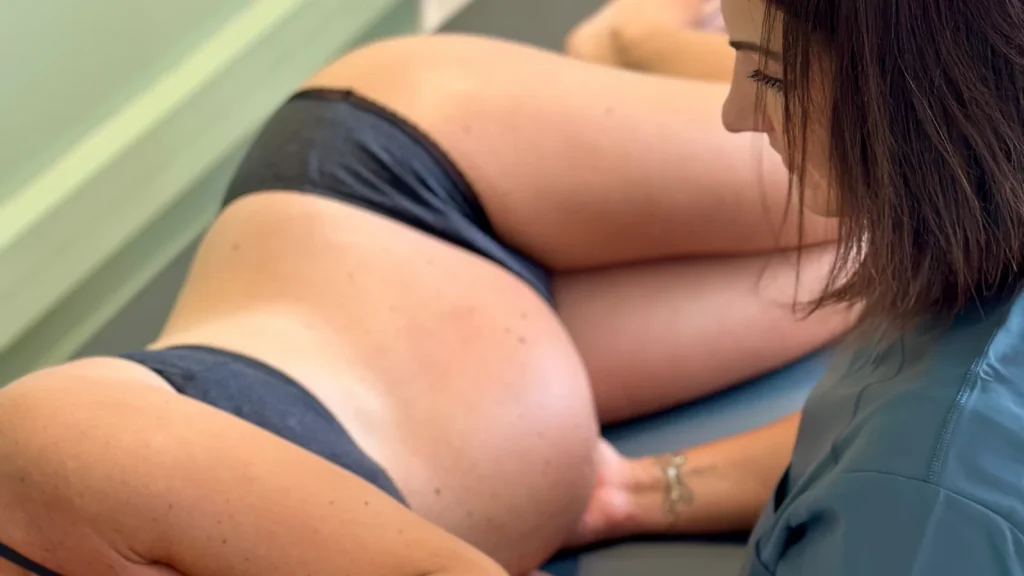
Mujer embarazada en sesión de osteopatía suave y adaptada

What is osteopathy and what role can it play during pregnancy?

Osteopathy is a manual therapy that works on mobility and the relationship between different structures of the body: joints, muscles, fascia, diaphragm, pelvis and other areas involved in overall balance.

During pregnancy, the goal is not to “correct” the body, but to support its adaptations. As the uterus grows and load distribution changes, compensations appear that can generate discomfort. Osteopathy can help these adaptations be experienced with more comfort and less tension.

Support, not a substitute for medical follow-up

Osteopathy does not replace gynecological, obstetric or midwife follow-up. It is, in all cases, part of a complementary approach aimed at wellbeing, comfort and mobility.

Manual work adapted to each stage

The techniques used during pregnancy should be gentle, respectful and adapted to the stage of pregnancy, the woman’s symptoms and the context of each pregnancy.

Why does the body change so much during pregnancy?

From the first weeks, the pregnant woman’s body begins to reorganize. Some of these transformations are hormonal; others are mechanical and become more evident as pregnancy progresses.

Hormonal changes and ligament laxity

Hormonal variations promote greater tissue flexibility and prepare the body for pregnancy and birth. At the same time, this increased laxity can make certain joints and support areas more sensitive or unstable.

Postural changes and centre of gravity

As the uterus grows, the centre of gravity changes. The pelvis adapts, the lumbar curve may increase and the abdominal muscles modify their function. All of this can translate into lumbar tension, pelvic overload or a feeling of fatigue in the back and legs.

Digestive, respiratory and circulatory adaptations

The increase in abdominal volume also changes the relationship between the uterus, diaphragm and digestive organs. This can encourage reflux, constipation, slower digestion or a feeling of shortness of breath. Circulatory changes may also lead to heavier legs or swelling, especially at the end of the day.

Common reasons to consult an osteopath during pregnancy

Every pregnancy is different, but some discomforts appear quite frequently and lead many women to seek osteopathic support.

Low back pain and pelvic tension

Low back pain is one of the most common discomforts during pregnancy. Osteopathy can help reduce muscular tension, improve pelvic mobility and support better load distribution.

Sciatica and radiating pain

Some women experience pain radiating toward the buttock or leg, often related to muscle tension, compression or overload in the pelvis and lumbar area. Osteopathic work can help relieve these tensions and improve the feeling of mobility.

Digestive discomfort

Reflux, constipation, a feeling of abdominal compression or heavy digestion are common during pregnancy. When indicated, an osteopathic approach can support these discomforts by working on diaphragm mobility, the rib cage and certain abdominal tensions.

Difficulty breathing, heaviness or body fatigue

As pregnancy progresses, some women feel it becomes harder to breathe deeply or that the body tires more quickly. Heavy legs, a feeling of congestion or sleep disturbances may also appear. Osteopathy can help improve overall comfort at this stage.

When can it be useful to consult during pregnancy?

There is no single ideal time to consult. The indication depends on the reason for consultation, the woman’s general condition and how the pregnancy is progressing.

First trimester

At this stage, some women consult for general tension, nausea, digestive discomfort, stress or pains that were already present before pregnancy and become more noticeable with the first bodily changes.

Second trimester

This is often a comfortable time to work on posture, pelvic mobility, the lumbar area and trunk adaptations. Many women feel that this stage is ideal for supporting the body before greater overloads appear.

Third trimester

In the final months, consultations are often focused on relieving lumbar tension, heaviness, muscular fatigue, feelings of compression and preparing the pelvis and body for birth.

What can osteopathy offer in preparation for birth?

In the final part of pregnancy, osteopathy can be part of body preparation that helps the woman approach birth with more mobility, less tension and a better perception of her body.

Mobility of the pelvis and diaphragm

Work on the pelvis, diaphragm and spine can support better bodily adaptation and a broader feeling of comfort and freedom of movement.

Less tension, more sense of bodily availability

Osteopathy does not induce labour or magically “position” the baby. What it can do is help reduce tension, release restrictions and support a more available and comfortable bodily context for facing this stage.

Supporting the emotional aspect of late pregnancy

For many women, the end of pregnancy comes with fatigue, emotional sensitivity and a need to feel supported. Gentle manual support can also help reduce the level of tension and allow this stage to be experienced with more calm and confidence.

Why should postpartum not be forgotten?

Although attention is often focused on pregnancy and birth, postpartum is also a stage of major physical and emotional demands. The body needs to recover, reorganize and adapt to new loads, new postures and new rhythms.

Rebalancing the pelvis, spine and overloaded areas

After birth, low back discomfort, a feeling of instability, coccyx tension, scar discomfort, upper back pain or overload related to breastfeeding and carrying may persist or appear.

Complementing pelvic floor physiotherapy

Osteopathy can be a very interesting complement to pelvic floor physiotherapy within a global and coordinated recovery process.

Recovering comfort and a sense of balance

Beyond a specific injury, many women consult simply because they do not yet feel that their body has recovered a sense of balance. And that perception also deserves attention.

Is osteopathy safe during pregnancy?

In general, yes, as long as the pregnancy is progressing normally and care is provided by a professional trained in supporting pregnant women.

Gentle and adapted techniques

The techniques used should be respectful, non-invasive and adapted to the stage of pregnancy. It is not about applying any manual technique, but about working with clinical judgement and sensitivity.

When it is advisable to consult the medical team beforehand

In cases of high-risk pregnancy or when there is a particular obstetric situation, it is advisable to seek the opinion of the doctor or midwife before starting any complementary treatment.

At Aliantis, we support pregnancy through a global perspective

At Aliantis Sitges, we understand pregnancy as a stage of transformation that deserves respectful, individualized support that is coherent with each woman’s needs. Osteopathy can be part of this process as a tool aimed at comfort, mobility and bodily wellbeing.

Our approach does not seek to correct a body that is changing, but to support it better. Listening, adapting, relieving and respecting the rhythm of each pregnancy are part of the way we work.

Consulting an osteopath during pregnancy does not mean that something is wrong. It often simply means that you want to experience this stage with more comfort, more balance and more support.

This blog article does not aim to generate new knowledge; it is based on the reading of scientific publications, blog articles and other texts.

TAMBIÉN TE PUEDE INTERESAR

Sigue explorando nuestro blog

Mujer en consulta de nutrición orientada a salud hormonal femenina

Nutrition and female hormones: understanding their relationship at every stage of life

Discover how nutrition can support female hormonal balance during puberty, the menstrual cycle, pregnancy and menopause.
April 21, 2026
Consulta de osteopatía centrada en la escucha y la valoración del paciente

Prevention in osteopathy: myth or reality?

Discover why prevention in osteopathy should not be understood as an automatic routine and in which cases regular follow-up may make sense.
April 21, 2026
Mujer embarazada esperando un avion

Heavy legs on the plane

Discover why heavy legs can occur on a plane and how lymphatic drainage, movement and certain habits can help you travel more comfortably.
April 20, 2026

¿Necesitas acompañamiento profesional en Sitges?

En Aliantis te acompañamos con un enfoque cercano, profesional y adaptado a tus necesidades.

Ubicación

Carrer de Salvador Olivella, 2

Local #10
08870 Sitges (Barcelona)

Horario

Lunes a viernes
8:00 – 20:00

This site is registered on wpml.org as a development site. Switch to a production site key to remove this banner.