Pelvic floor physiotherapy: what it is, what it is for and when to consult
Pelvic floor physiotherapy is a fundamental specialty for health, wellbeing and quality of life. Although it is often associated with pregnancy or postpartum recovery, its scope is much broader: it can help in cases of incontinence, pelvic pain, prolapse, sexual dysfunction and other issues that affect daily life.
The pelvic floor plays essential roles in continence, supporting the pelvic organs, trunk stability and sexual function. When this area loses strength, coordination or adaptability, symptoms can appear that many people normalize for too long.
In this article, we explain what pelvic floor physiotherapy is, what problems it can treat, how the assessment is carried out and when it is advisable to consult.
What is the pelvic floor and why is it so important?
The pelvic floor, also called the perineum, is a group of muscles, fascia and connective tissues located at the bottom of the pelvis. It acts as a support base for organs such as the bladder, uterus and rectum, and participates in important functions such as urinary and fecal continence, lumbopelvic stability, sexuality and childbirth.
Despite its importance, it remains a poorly understood area of the body for many people. In consultation, it is common to meet patients who have been living for a long time with urine leakage, a feeling of pelvic heaviness, pain during intercourse or persistent discomfort, without knowing that the pelvic floor may be involved.
Its proper function does not depend only on strength. It also needs elasticity, coordination, the ability to relax and a good relationship with breathing, posture and the abdominal muscles. For this reason, talking about pelvic floor health means talking about balance, not just muscle tone.
What is pelvic floor physiotherapy?
Pelvic floor physiotherapy, also known as perineal physiotherapy, is a physiotherapy specialty focused on assessing, preventing and treating dysfunctions related to this anatomical region.
What does this specialty involve?
Its aim is to improve pelvic floor function and, with it, relieve symptoms, regain control, reduce pain and improve quality of life. To do this, treatment is not limited to “strengthening the perineum”; it analyzes how this area behaves within the body as a whole.
Pelvic floor physiotherapy may include education, therapeutic exercise, breathing work, manual therapy, muscle control strategies, biofeedback or electrical stimulation, depending on the needs of each case.
Who can it help?
Although it is often associated with women’s health, this specialty is not exclusively for women. It can also be useful for men and children, depending on the clinical situation.
In practice, it is especially common during stages such as pregnancy, postpartum recovery, menopause or after certain pelvic surgeries, but also in people with pelvic pain, urinary disorders, sexual dysfunction or problems related to sports practice.
What problems can pelvic floor physiotherapy treat?
Urinary and fecal incontinence
Urinary incontinence is one of the most frequent reasons for consultation. It may appear when coughing, sneezing, laughing, jumping or exercising, and it can also manifest as an urgency that is difficult to control. In some cases, there may also be fecal incontinence or difficulty controlling gas.
These symptoms should not be normalized, even if they are common after childbirth, during menopause or after certain surgeries. Physiotherapy can help improve pelvic floor control, coordination and response capacity, significantly reducing the impact of these issues on daily life.
Pelvic organ prolapse
Prolapse occurs when one or more pelvic organs descend due to a lack of support, creating a feeling of heaviness, pressure or a “bulge” in the vagina. It can affect the bladder, uterus or rectum.
Pelvic floor physiotherapy can help improve symptoms, optimize muscle function and reduce the impact of prolapse on everyday life. In some cases, it is also part of a conservative treatment approach before considering other options.
Chronic pelvic pain
Pelvic pain can have many causes and, in some cases, the pelvic floor plays an important role in maintaining it. It may appear as pain in the lower abdomen, pelvis, vulva, perineum or anal area, and is sometimes associated with muscle tension, hypersensitivity or changes in local mobility.
Physiotherapy can help identify whether there is an associated muscular or fascial dysfunction and work on it with techniques aimed at reducing tension, improving mobility and restoring comfort.
Sexual dysfunction
A pelvic floor that is too weak or, conversely, excessively tense can influence sexual function. In women, this may be related to pain during intercourse, difficulty with penetration, a feeling of tension or reduced comfort. In men, discomfort, functional changes or symptoms associated with tension and muscle control may also appear.
In these cases, pelvic floor physiotherapy can be part of a respectful and progressive approach that helps restore function, comfort and body confidence.
Pregnancy and postpartum recovery
During pregnancy, the pelvic floor adapts to major hormonal, postural and mechanical changes. After childbirth, it must also recover from a highly demanding period, whether the birth was vaginal or by cesarean section.
Physiotherapy can help prepare this area during pregnancy, support postpartum recovery, prevent complications and guide individualized rehabilitation. It is not only about “strengthening”, but about assessing the state of the tissue, how the body moves and what each woman needs at that moment.
How is a pelvic floor physiotherapy assessment carried out?
Assessment is an essential part of the process. It allows us to understand what is happening, which structures may be involved and what type of treatment makes the most sense in each case.
It usually begins with a detailed clinical interview exploring symptoms, medical history, obstetric history if relevant, the type of discomfort, habits, sports practice and the functional impact of the problem.
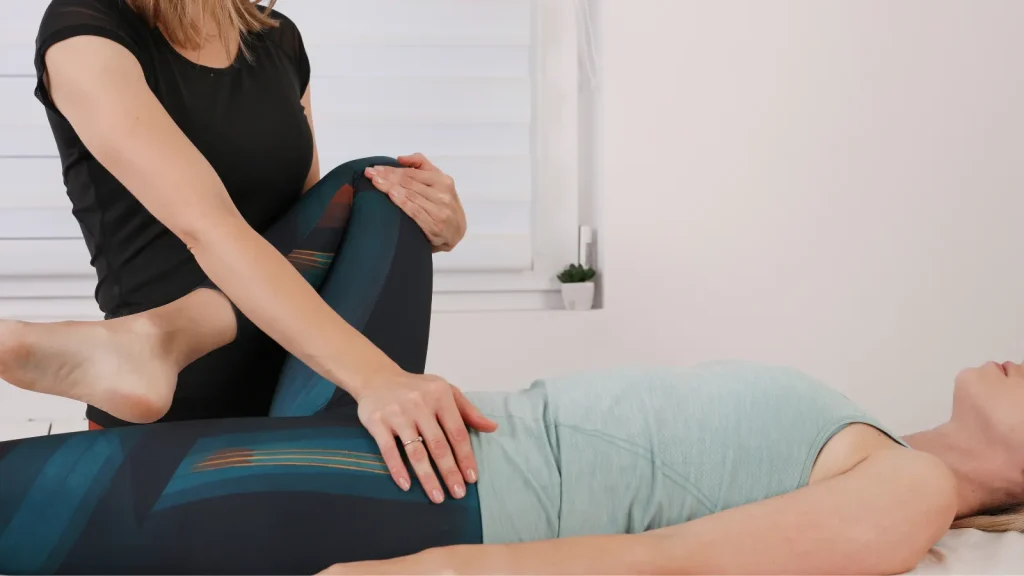
Then, an adapted physical examination is carried out. This may include postural observation, breathing assessment, pelvic and spinal mobility, abdominal control and, when indicated and with consent, a specific pelvic floor assessment.
In some cases, complementary tools such as biofeedback or functional ultrasound may also be used. All of this makes it possible to design a realistic, progressive treatment plan adapted to the person’s specific situation.
What treatments are commonly used?
Therapeutic exercise and muscle control
An important part of treatment may focus on learning to correctly activate, relax or coordinate the pelvic floor muscles. Sometimes strength needs to be improved; at other times, tension needs to be reduced or synchronization with breathing and the abdominal muscles needs to be improved.
The well-known Kegel exercises may be part of treatment in some cases, but they are not always the right answer for every patient. The important thing is not to perform contractions automatically, but to understand what the tissue really needs and how the body responds.
Biofeedback and electrical stimulation
Biofeedback provides real-time information about muscle activity, helping improve awareness and control. It can be very useful in certain learning or re-education situations.
Electrical stimulation can also be used in some cases, especially when there is significant weakness or difficulty activating the muscles correctly. Like any tool, it should be used within an individualized strategy.
Manual therapy, breathing and education
Manual therapy can help work on tissue restrictions, tension, increased sensitivity or local and global mobility changes. Breathing work, postural education and strategies related to daily habits are also often integrated.
For many people, better understanding their body and stopping the normalization of certain symptoms is part of the therapeutic process. In this sense, education is a treatment tool in itself.
The importance of the pelvic floor in sport and prevention
The pelvic floor also plays an important role in sports practice. It participates in trunk stability, pressure management and force transfer during movement.
When this area does not function well, symptoms may appear such as urine leakage when running or jumping, a feeling of heaviness, pain or difficulty tolerating certain loads. This can affect not only performance, but also confidence and continuity in sports practice.
In addition to treating existing symptoms, pelvic floor physiotherapy also has a preventive role. It can be useful during pregnancy, postpartum recovery, menopause, before returning to sport or after surgery, among other situations.
Prevention does not mean intervening without reason; it means assessing in time an area that often only receives attention once symptoms have already appeared.
When should you consult a pelvic floor physiotherapist?
It may be a good idea to consult if symptoms appear such as urine leakage, a feeling of pelvic heaviness, pelvic pain, discomfort during sexual intercourse, difficulty controlling gas, doubts about postpartum recovery or discomfort related to sports practice.
It is also advisable to consult if you are returning to exercise after pregnancy, if you have undergone pelvic surgery or if you are at a stage where you notice significant body changes, such as menopause.
The earlier a dysfunction is assessed, the easier it usually is to understand and address it appropriately. In many cases, early intervention helps prevent the problem from becoming chronic or limiting daily life further.
It is also important to remember that pelvic floor physiotherapy is part of a multidisciplinary approach. In certain situations, a prior medical diagnosis is necessary to rule out underlying conditions and guide treatment correctly.
At Aliantis, we support you in Sitges
At Aliantis, we support people with symptoms related to the pelvic floor, pregnancy, postpartum recovery, pelvic pain or functional rehabilitation. Our approach combines individual assessment, adapted treatment and a global view of health and movement.
If you notice discomfort that affects your continence, pelvic comfort, recovery or quality of life, a specialized assessment can help you understand what is happening and what type of treatment makes sense in your case.
This blog article does not aim to generate new knowledge; it is based on the reading of scientific publications, blog articles and other texts.