
Postoperative lymphatic drainage: recover better after surgery
Gentle, targeted care to reduce swelling after surgery
After surgery, it is common to experience swelling, tightness, heaviness or discomfort. As the body begins the healing process, tissues repair themselves, inflammation develops, local circulation changes and fluid may temporarily accumulate in certain areas.
This postoperative swelling is particularly common after liposuction, abdominoplasty (tummy tuck), breast surgery, facelifts and some reconstructive procedures. Although it is usually a normal part of recovery, it is not always easy to live with. The body feels different, movement may be limited, tissues can feel tight, and the healing process often raises questions.
This is precisely when postoperative lymphatic drainage can become a valuable part of recovery. When performed correctly and at the appropriate time, it may help reduce the feeling of swelling, improve comfort, support recovery and help patients reconnect with their bodies with greater confidence.
At Aliantis Clinic in Sitges, we offer Renata França lymphatic drainage, a dynamic, precise and structured manual technique. When adapted to the postoperative period, it supports the lymphatic system while respecting healing tissues.
The goal is not to force the body to heal faster, but to support it through a stage where circulation, gentle care, consistency and confidence all play an important role.
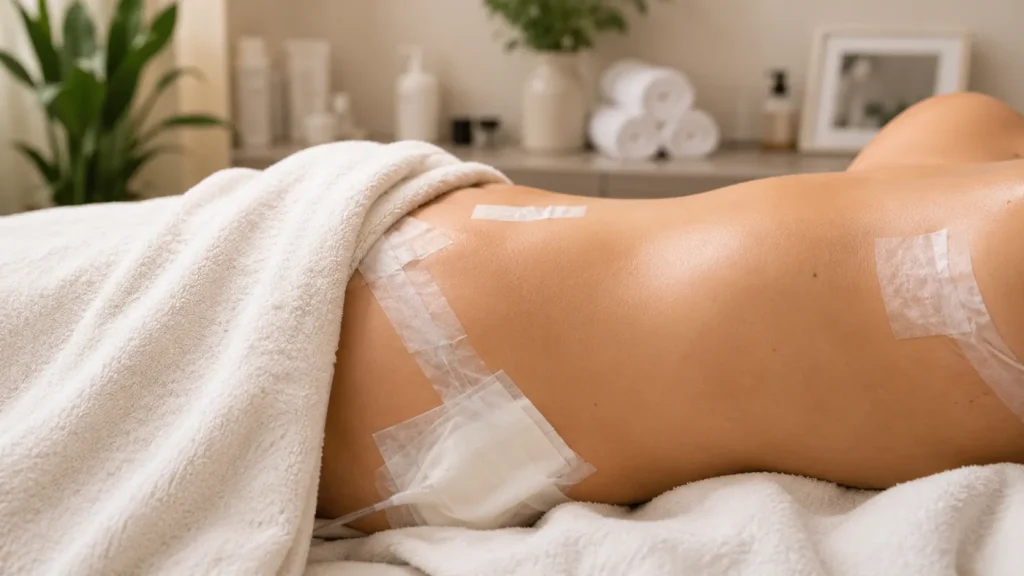
Why do we swell after surgery?
Postoperative swelling: a normal response
Swelling is one of the body’s most common responses after surgery. It results from a temporary accumulation of fluid within the tissues, linked to inflammation, surgical microtrauma and short-term changes in blood and lymphatic circulation.
This inflammatory response is not necessarily a problem. It plays an essential role in tissue repair and healing. However, when swelling becomes significant, it can also be uncomfortable.
The skin may feel tight, operated areas can seem firm, heavy or sensitive, and movements may feel less natural. After cosmetic surgery, this phase can also be emotionally challenging because the final result is often not yet visible.
The role of the lymphatic system during recovery
The lymphatic system acts as the body’s natural drainage network. It collects excess fluid, proteins and cellular waste from the tissues before gradually returning them to the bloodstream.
After surgery, this system may temporarily work less efficiently. Procedures such as liposuction or abdominoplasty affect deeper tissues and can temporarily disrupt normal lymphatic drainage. As a result, fluid is cleared more slowly, contributing to the feeling of swelling.
Manual lymphatic drainage is designed to support this natural process. It does not replace the body’s own healing mechanisms, but may help facilitate them.
💡 Did you know?
Postoperative swelling is not just a cosmetic concern. It can affect comfort, mobility, sleep, breathing and the overall recovery experience.
What is postoperative lymphatic drainage?
A manual technique that supports lymphatic circulation
Manual lymphatic drainage is a specialised hands-on technique designed to stimulate lymphatic circulation and encourage the gradual removal of excess fluid that accumulates within the tissues.
During the postoperative period, it is not intended to be a deep massage or an intensive muscular treatment. Healing tissues are sensitive, sometimes painful, and still repairing themselves. For this reason, lymphatic drainage must always be adapted to the type of surgery performed, the treated area, the patient’s symptoms, the stage of healing and the surgeon’s recommendations.
A well-performed postoperative lymphatic drainage session does not aim to “break down” adhesions or force swelling to disappear. Instead, it supports the body’s natural recovery process while respecting its healing rhythm.
A treatment that can make recovery more comfortable
In clinical practice, many patients report feeling noticeably better after treatment. They often describe a lighter feeling, reduced tissue tightness, less swelling and greater comfort when moving.
Lymphatic drainage can also provide reassurance throughout recovery. After surgery, it is perfectly normal to wonder whether swelling is normal, whether tightness will improve or whether healing is progressing as expected.
Professional guidance helps patients better understand these sensations, recognise what is part of the normal healing process and identify situations that require medical assessment.
Renata França lymphatic drainage after surgery
A dynamic, precise and structured approach
The Renata França Method is a manual lymphatic drainage technique recognised for its rhythmic movements, precision and highly structured treatment sequence. It is widely appreciated for the sensation of lightness, decongestion and overall wellbeing that many patients experience after treatment.
When used in a postoperative setting, however, the technique must be carefully adapted. A body recovering from surgery cannot be treated in the same way as a healthy, non-operated body. Pressure, treatment areas, session length, rhythm and patient positioning must all take into account the type of surgery performed and the sensitivity of healing tissues.
At Aliantis, we apply the Renata França Method within a recovery-focused approach. We preserve the precision and effectiveness that characterise the method while always respecting the body’s healing process.
Why this method can be particularly helpful after surgery
After an operation, most patients are looking for three things: to reduce swelling, feel more comfortable and better understand what is happening to their body. When appropriately indicated, Renata França lymphatic drainage can help address these needs.
Its strength lies in combining a specific manual technique with a tangible improvement in body awareness. Many patients describe feeling lighter, less restricted by tissue tightness and more comfortable throughout their recovery.
This approach can be especially valuable after procedures that cause significant swelling, heaviness or tissue tension. It may help improve comfort, support recovery and make the first weeks after surgery easier to manage.
💡 Did you know?
Renata França lymphatic drainage is not only about reducing swelling. It can also help patients regain confidence in their bodies after surgery by improving comfort, reducing fear of movement and providing a clearer sense of recovery.
After which types of surgery is lymphatic drainage most commonly recommended?
After liposuction
Liposuction is one of the procedures most commonly associated with postoperative lymphatic drainage. Treated areas may remain swollen, firm, sensitive or uneven for several weeks.
In this situation, lymphatic drainage may help reduce the sensation of swelling and tissue tightness. It can also improve comfort while the operated areas gradually soften during recovery.
The essential principle is to respect the healing process. Every session should be progressive, adapted to the patient and fully consistent with the surgeon’s recommendations.
After abdominoplasty or body contouring surgery
Following an abdominoplasty (tummy tuck), body lift or other body contouring procedures, abdominal swelling may persist for quite some time. Tightness can make changing position, walking, deep breathing and even sleeping more difficult.
In these cases, lymphatic drainage may provide valuable support. Many patients report feeling less restricted and progressively more comfortable as recovery advances.
However, caution remains essential. A fluid collection, marked asymmetry, increasing pain or the sensation of fluid moving beneath the skin should always be assessed by the surgeon, as these may indicate a seroma.
After breast surgery
Swelling is common after breast augmentation, breast reduction, mastopexy (breast lift) or breast reconstruction. Some patients experience considerable tightness across the chest, breasts, armpits or upper back.
Once authorised by the surgeon, lymphatic drainage may help improve overall comfort during recovery. Priority should always be given to monitoring surgical scars, pain, redness, local warmth and any signs of infection.
After facial surgery
Following a facelift, blepharoplasty (eyelid surgery) or neck surgery, swelling may be highly visible and sometimes difficult to cope with. The face changes temporarily, tissues feel tight and the altered appearance may be emotionally challenging.
When appropriately adapted, lymphatic drainage may help support the gradual reduction of swelling. Facial tissues are particularly delicate, and any suspicion of a haematoma or other complication should always be assessed by a doctor before treatment.
What benefits can you expect from postoperative lymphatic drainage?
Reduced swelling
The primary goal of postoperative lymphatic drainage is to help reduce the sensation of swelling. While the change is not always dramatic or immediate, many patients notice that treated areas feel less tight, lighter and more comfortable after their sessions.
Greater comfort during movement
When swelling causes stiffness and tissue tension, everyday movements can become more difficult. Walking, standing upright, changing position or simply getting dressed may feel uncomfortable. By helping relieve tissue tightness, lymphatic drainage may improve comfort and make movement feel more natural, particularly when combined with the gradual return to activity recommended by the surgeon.
A calmer, more confident recovery
Recovery is not only physical—it is also emotional. Many patients closely monitor every change in their body, compare their appearance from one day to the next and worry about whether their recovery is progressing normally.
Lymphatic drainage provides more than hands-on treatment. It also offers professional guidance and reassurance. Patients have the opportunity to ask questions, better understand the healing process and distinguish between normal postoperative changes and signs that may require medical attention.
Improved body awareness
Following cosmetic surgery, the final outcome is rarely visible straight away. Swelling may temporarily hide body contours, create asymmetry or give the impression that the procedure has not achieved the expected result.
As recovery progresses, lymphatic drainage can help patients feel more connected to their bodies and experience this transition with greater patience and confidence.
💡 Common myth
“If I’m still swollen, something must be wrong.”
Not necessarily. Swelling is a normal part of healing and may persist for several weeks—or even several months, depending on the procedure. What matters most is how it evolves over time, whether it is accompanied by warning signs and whether recovery follows the expectations set by your surgeon.
What does the scientific evidence say?
A valuable clinical tool when used appropriately
Manual lymphatic drainage is widely used in postoperative rehabilitation to help manage swelling, tissue tightness and discomfort after surgery. Many patients report feeling more comfortable and better supported throughout their recovery.
Current scientific research, however, shows that results vary depending on the type of surgery, the techniques used, the treatment protocol and the outcomes being measured. This does not mean that lymphatic drainage is ineffective. Rather, it highlights the importance of individualised treatment and realistic expectations. Like many rehabilitation interventions, postoperative lymphatic drainage should be considered as one part of a comprehensive recovery programme rather than a standalone solution.
Why research findings differ
One of the main challenges in interpreting the scientific literature is the lack of standardisation. Studies use different lymphatic drainage techniques, treatment frequencies, session durations and outcome measures. They also investigate very different patient populations and surgical procedures.
For example, lymphatic drainage following liposuction cannot be directly compared with treatment after orthognathic surgery or with rehabilitation for breast cancer-related lymphoedema.
For this reason, at Aliantis we believe that scientific evidence should always be combined with clinical expertise, individual assessment and the patient’s own experience. Evidence-based practice is about integrating all three—not relying on research alone.
When should lymphatic drainage begin after surgery?
The right timing depends on the procedure
There is no universal timeline that applies to every patient. The appropriate time to begin postoperative lymphatic drainage depends on several factors, including the type of surgery performed, the presence of surgical drains, wound healing, pain levels, the risk of bleeding or seroma formation and, above all, the surgeon’s recommendations.
Some patients may begin treatment relatively early, while others should wait longer. This delay is not a setback—it is simply part of a safe and well-managed recovery.
Your surgeon’s approval is essential
The most important rule is straightforward: postoperative lymphatic drainage should only begin once your surgeon has confirmed that it is appropriate.
This ensures that healing is progressing normally, that there are no contraindications and that treatment can be adapted to your individual recovery.
At Aliantis, we always work within this multidisciplinary framework. If there is any uncertainty regarding a patient’s recovery, we encourage medical reassessment before starting or continuing treatment.
When should lymphatic drainage be avoided?
Warning signs that require medical attention
Postoperative lymphatic drainage is intended to support normal healing. It should never be used to delay the diagnosis or management of a surgical complication.
You should contact your surgeon or seek medical advice if you experience increasing pain rather than gradual improvement, fever or chills, spreading redness or warmth around the surgical area, unusual discharge or an unpleasant odour from the wound, marked asymmetry or a fluid-filled swelling that appears to move beneath the skin, shortness of breath, chest pain, or significant swelling and pain in one leg.
These symptoms may indicate a complication that requires medical assessment rather than manual treatment.
Safety always comes first
These precautions do not reduce the value of lymphatic drainage. On the contrary, they ensure that treatment is delivered safely and at the right time. An experienced practitioner should know not only when to treat, but also when not to treat and when referral back to the surgical team is the safest option.
This professional judgement is one of the key differences between specialised postoperative care and a standard massage treatment.
How many sessions are needed?
A pace adapted to each patient
The number of sessions depends on the type of surgery, the extent of the swelling, the patient’s sensitivity and their goals. Some people notice an improvement from the very first sessions. Others need more gradual support.
The ideal approach is to start with a clear objective: relieve tension, improve comfort, support the reduction of swelling, regain mobility or experience the postoperative period more comfortably.
The treatment is then reassessed. If lymphatic drainage provides a clear benefit, it can be continued. If recovery is progressing well and the patient feels more independent, the sessions can be spaced further apart.
The goal: supporting independence
At Aliantis, we do not aim to create dependence on treatment. Lymphatic drainage should help the patient move through a stage of recovery, understand their body and recover with greater peace of mind.
After that, the body continues its own work through healing, gradual movement, sleep, hydration, good nutrition and following the postoperative instructions.
What else helps recovery after surgery?
Gradual movement
Once authorised by the surgeon, movement becomes an essential part of recovery. Walking gently, changing position regularly and gradually returning to daily activities can improve circulation and reduce the negative effects of prolonged immobility.
Lymphatic drainage and movement are not opposed to each other. They can complement one another.
Compression garments, when indicated
After some surgical procedures, wearing a compression garment is recommended. It should be used according to your surgeon’s instructions regarding the duration, how often it should be worn, the fit and when it can be removed.
Lymphatic drainage does not replace compression garments when they have been prescribed. It can complement them.
Pain management and sleep
Poorly controlled pain can limit movement, breathing and sleep. All of these play an important role in recovery. Following the prescribed medication, getting enough rest and avoiding premature physical effort are part of the foundations of postoperative recovery.
A comprehensive approach
Postoperative recovery never depends on a single treatment. It is based on a combination of factors: the quality of the surgery, medical follow-up, appropriate movement, prevention of complications, nutrition, sleep, stress management and manual therapy when indicated.
Renata França lymphatic drainage can be integrated into this comprehensive approach, providing valuable support for comfort and the feeling of recovery.
Renata França lymphatic drainage at Aliantis, Sitges
At Aliantis Clinic, we offer Renata França lymphatic drainage as part of a personalised, professional approach that fully respects the postoperative recovery process.
Each session takes into account your surgery, your symptoms, your goals and your surgeon’s recommendations. We adapt the pressure, the pace and the areas treated to support your body without forcing it.
Our goal is to help you feel lighter, more comfortable and more confident throughout your recovery.
After surgery, the body needs to heal, reabsorb fluid, regain its normal balance and recover confidence in movement. Renata França lymphatic drainage can support this process by helping to reduce the sensation of swelling, improve comfort and make recovery feel smoother.
When properly indicated and appropriately performed, postoperative lymphatic drainage is not simply a comfort treatment: it is an intelligent way to support recovery.
Frequently Asked Questions about postoperative lymphatic drainage
Is lymphatic drainage useful after surgery?
Yes. It can be very helpful in supporting recovery, especially when the patient experiences swelling, tightness, heaviness or discomfort. Its main purpose is to improve comfort, support lymphatic circulation and help the patient experience the postoperative period more comfortably.
Is lymphatic drainage mandatory after liposuction?
No, it is not mandatory, but it is often recommended or sought after following liposuction, as this procedure commonly causes swelling, a feeling of tightness and sometimes firm or sensitive areas. It should be carried out at the appropriate time and with the surgeon’s approval.
When should lymphatic drainage begin after surgery?
The right time depends on the type of surgery, the stage of healing, the level of pain, the possible presence of surgical drains and the surgeon’s recommendations. There is no universal timeframe. The safest approach is to begin after medical approval.
Is the Renata França Method suitable during the postoperative period?
Yes, provided that it is adapted. The Renata França Method is dynamic, precise and structured. During the postoperative period, it must be adapted to the sensitivity of the tissues, the operated areas and the medical recommendations.
Is lymphatic drainage painful?
Postoperative lymphatic drainage should not cause significant pain. The tissues may be sensitive after surgery, but the session should remain tolerable. Severe, unusual or increasing pain should lead to a reassessment of the situation.
How many sessions are needed?
It depends on the patient’s progress. Some people notice improvement after only a few sessions, while others require more gradual support. The number of sessions should be adapted to the patient’s comfort, swelling, mobility and goals.
Can lymphatic drainage prevent a seroma?
No. Lymphatic drainage cannot guarantee that a seroma will be prevented. A seroma is a possible complication after certain surgical procedures and should be assessed by the surgeon. A fluid-filled swelling, marked asymmetry or a sensation of fluid movement should prompt medical consultation.
Can lymphatic drainage be performed if the scar has not completely closed?
It depends on the situation. If there is an open wound, discharge, warm redness, fever or any doubts about wound healing, a medical assessment is necessary before any treatment session.
This blog article does not aim to generate new knowledge; it is based on the reading of scientific publications, blog articles and other texts.
Sources:
Cheville AL, McLaughlin SA, Glaser GE, Boughey JC. Cancer related lymphedema. BMJ. 2025.
Marxen T, et al. The Utility of Lymphatic Massage in Cosmetic Procedures. 2023.
Galdino-Santos LG, et al. Perioperative therapies to reduce edema after orthognathic surgery: a systematic review and meta-analysis. Oral Surgery, Oral Medicine, Oral Pathology and Oral Radiology. 2022/2023.
Doubblestein D, et al. Pre- and Post-Microsurgical Rehabilitation Interventions and Outcomes on Breast Cancer–Related Lymphedema: a Systematic Review. Current Oncology Reports. 2023.
Rao G, et al. A Systematic Review and Meta-Analysis Evaluating the Surgical Outcomes of Progressive Tension Suturing Compared to Drains in Abdominoplasty Surgery. Aesthetic Surgery Journal. 2024.
Sauro KM, et al. Enhanced Recovery After Surgery Guidelines and Hospital Length of Stay, Readmission, Complications, and Mortality. JAMA Network Open. 2024.