Concussions in sport: how to recognize them, prevent them and act in time
In sport, not all injuries are visible. Some do not leave open wounds, do not cause deformities and do not always force the athlete to leave the field immediately. However, they can have profound consequences for memory, concentration, balance, mood and long-term health. This is the case with concussion.
It is often described as an “invisible epidemic” because it can go unnoticed, be minimized or be confused with a minor blow. And yet, a poorly identified or poorly managed concussion can change an athlete’s evolution in a matter of seconds.
In this article, we explain what a concussion is, which symptoms should raise concern, which sports carry a higher risk, what complications may appear and why prevention and a culture of brain health are now essential in any sporting environment.
What is a concussion?
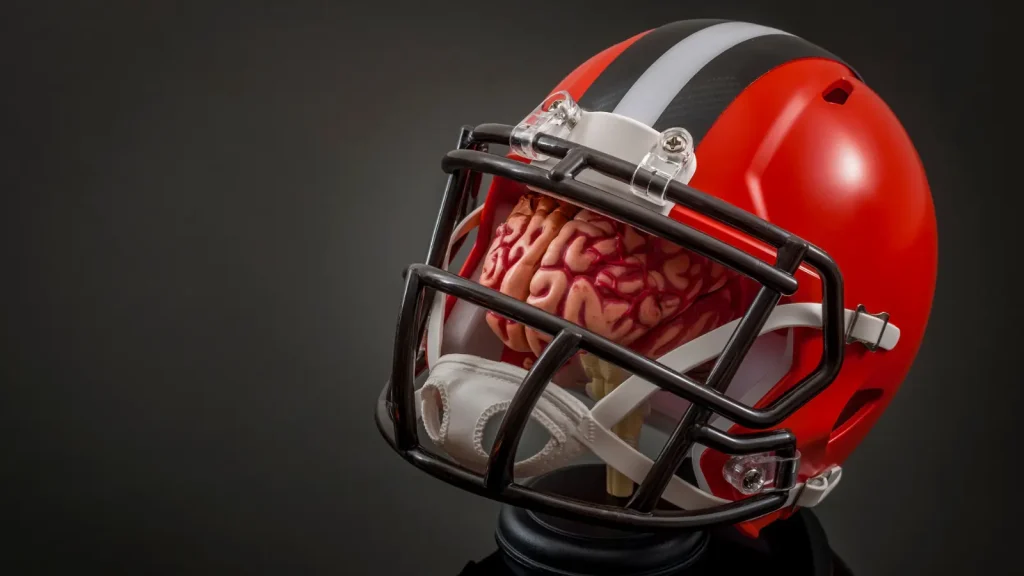
A concussion is a temporary alteration of brain function caused by a direct or indirect impact to the head or body. There is not always a loss of consciousness, and in many cases there are no obvious external signs. This is precisely why it can be difficult to recognize.
What happens is not simply “a hard blow”. The sudden movement of the brain inside the skull can cause a temporary dysfunction of brain cells and disturb the normal balance of the nervous system. This can lead to physical, cognitive and emotional symptoms, which sometimes appear immediately and sometimes several hours later.
Why is it considered an invisible injury?
One of the main difficulties is that a concussion is not always visible from the outside. The athlete may stand up, keep walking, answer questions or even want to continue the activity. But this does not mean that the brain is functioning normally.
The absence of a visible wound, loss of consciousness or alarming image means that many concussions are underestimated. For this reason, early recognition depends more on observing signs and symptoms than on the external appearance of the impact.
What symptoms can appear?
Symptoms can vary greatly from one person to another, but the most common include headache, dizziness, nausea, a feeling of mental slowness, confusion, memory problems, sensitivity to light or noise, balance disturbances and difficulty concentrating.
Irritability, fatigue, sleepiness, mood changes or a feeling of “not being right” without being able to explain it clearly may also appear. In some cases, symptoms do not appear immediately, which means the athlete must be monitored during the hours following the impact.
In which sports are they more common?
Combat and collision sports
Sports with a risk of falls or impact
Why no athlete is completely exempt
Although some disciplines have a higher incidence, the reality is that any athlete can suffer a concussion. Even in sports that appear less exposed, such as football, basketball or handball, risky situations can occur through collisions, accidental blows, falls or impacts with the ground.
Experience, competition level or physical condition do not eliminate this risk. What changes is the ability of the environment to recognize it and act quickly.
Who may be more affected?
Female athletes
Adolescents and young adults
Athletes with a history of concussion
What consequences can a poorly managed concussion have?
Post-concussion syndrome
In some people, symptoms do not disappear in the first days or weeks and persist longer than expected. Headache, dizziness, sensitivity to light, fatigue, difficulty concentrating, insomnia or mood changes may continue.
When this happens, the athlete’s performance is not the only thing affected. Academic, professional, social and emotional life may also be disrupted.
Second impact and serious neurological risk
One of the most concerning scenarios is a second concussion or new impact before the first one has fully healed. In this context, the brain may respond worse to trauma and the risk of a serious complication may increase.
For this reason, one of the most important rules in modern sport is clear: if a concussion is suspected, the athlete should not return to play the same day.
Long-term cumulative effects
What should you do if a concussion is suspected?
Remove the athlete immediately
Do not allow same-day return
This is one of the most important measures. Even if the athlete says they feel fine or wants to continue, they should not return to play the same day if a concussion is suspected.
Monitor symptom progression
After the impact, symptoms should be observed over the following hours. Some symptoms can worsen or appear later, which can completely change the urgency of the situation.
Request medical assessment
What role does protective equipment play?
Helmets, guards and other safety equipment can reduce the risk of some serious injuries, but they do not completely eliminate the risk of concussion. The brain can be affected not only by a direct blow, but also by sudden acceleration and deceleration of the skull.
In addition, relying too much on protective equipment can create a false sense of security. Protection is important, but it does not replace technique, education or appropriate protocols.
How has sport changed in recent years?
Stricter protocols
Today, there is much greater emphasis on removing the athlete when in doubt, avoiding immediate return and making the return to play subject to progressive and controlled assessment.
More training for coaches and families
Prevention no longer depends only on the team doctor. Coaches, clubs, families and athletes need to recognize the basic signs and understand that a concussion is not just a simple “bump on the head”.
A necessary cultural shift
Prevention and a culture of brain health
Recognize earlier, act better
The earlier a concussion is identified, the better the athlete can be protected and the greater the chances of avoiding complications or recurrence.
Teach athletes not to minimize symptoms
Not every athlete will be able to describe clearly what they feel, and not every environment will know how to interpret it. That is why it is so important to teach that a headache, unusual behaviour or a feeling of slowness after a blow should not be ignored.
Understand that recovery is part of performance
At Aliantis, we support sport through an integrative approach
At Aliantis, we understand sport as a source of energy, health and personal achievement, but also as a space that must respect the limits of the body and mind. For this reason, we defend a sporting culture in which prevention, recovery and brain health have the place they deserve.
When a concussion occurs, the priority is always medical assessment and appropriate follow-up. From there, comprehensive support for the athlete may also include attention to balance, physical recovery, stress management, body confidence and progressive return to activity.
This blog article does not aim to generate new knowledge; it is based on the reading of scientific publications, blog articles and other texts.