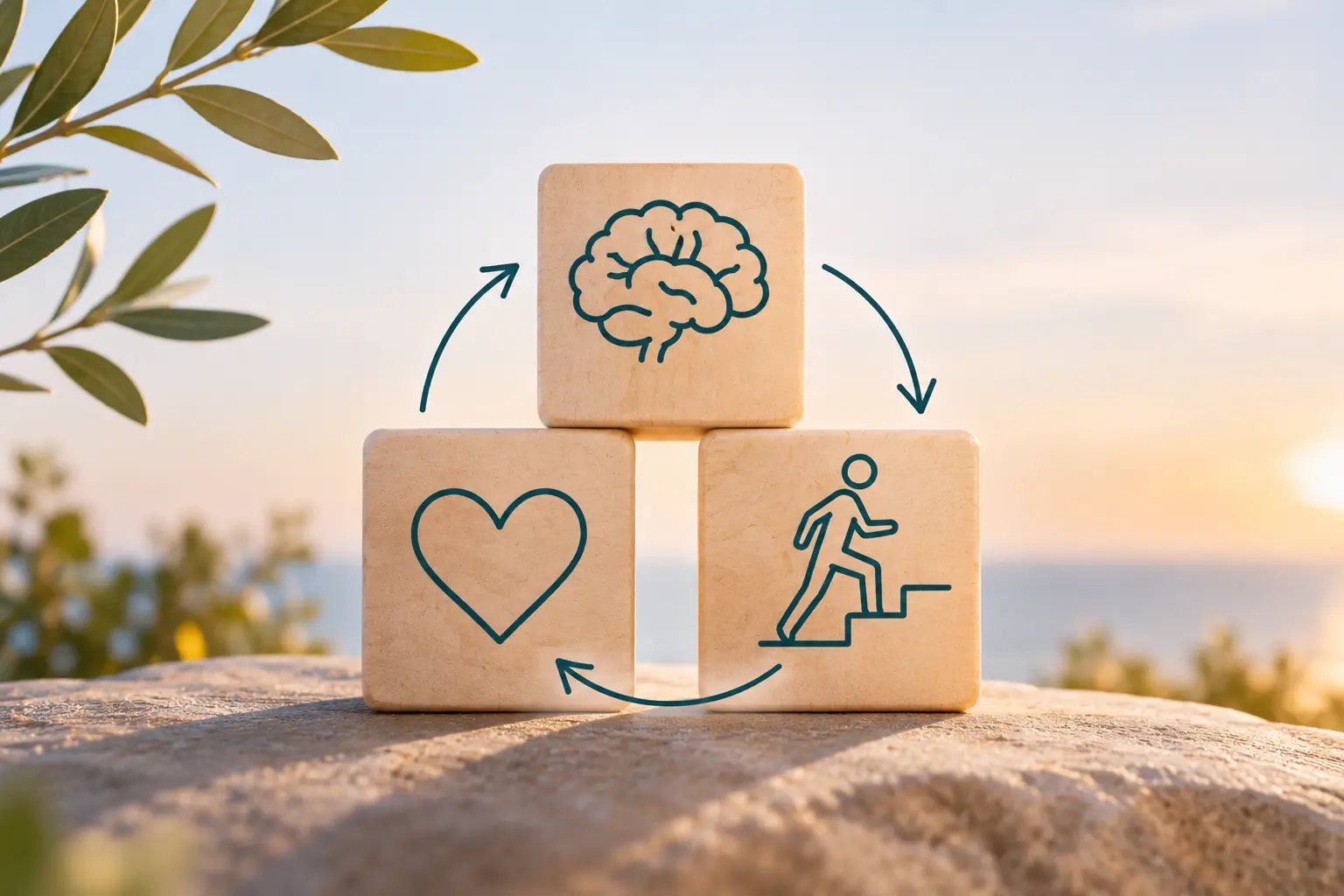
Anxiety and physical symptoms: when the body expresses what we feel
Palpitations, muscle tension, digestive discomfort, difficulty breathing or persistent fatigue. Sometimes, our body seems to be on high alert without any obvious reason.
Although we often associate anxiety with negative thoughts, worries or nervousness, its manifestations can also be deeply physical.
In fact, many people initially seek medical advice for physical symptoms without realising that anxiety may be contributing to them.
Why does this happen? What role do our nervous system and hormones such as cortisol play? How can we recognise these signals, and what can we do to feel better?
Understanding the relationship between our emotions, thoughts and bodily sensations is a first step towards improving our well-being.
Why does anxiety cause physical symptoms?
Anxiety is a natural response of our body to situations we perceive as threatening, uncertain or difficult to control.
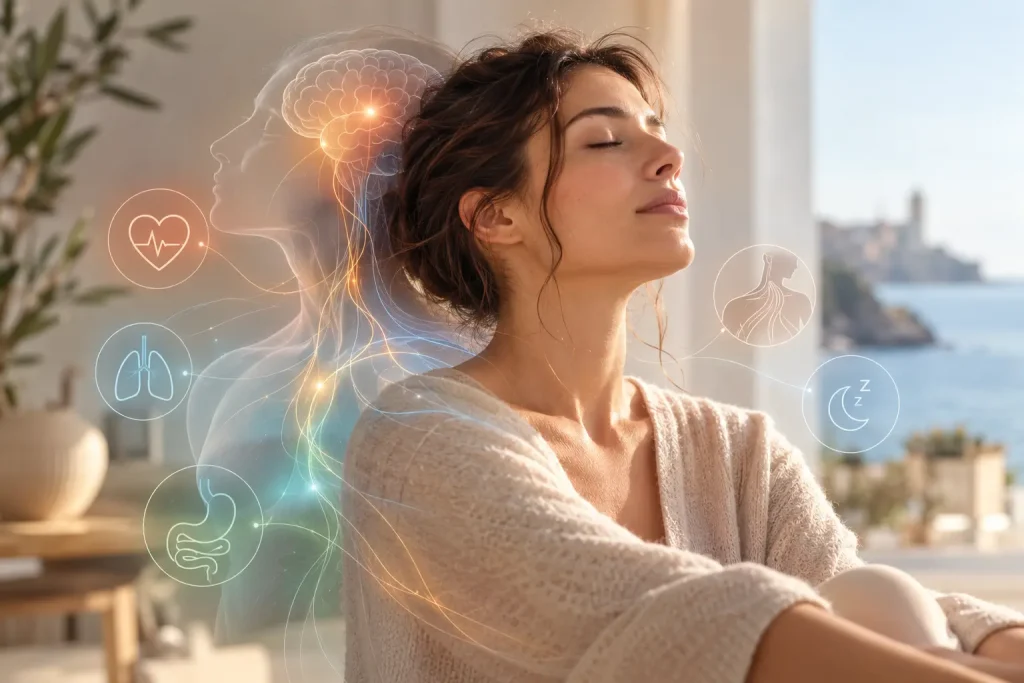
When our brain identifies a potential danger, it activates different protective mechanisms designed to prepare the body to respond.
Our heart rate may increase, our breathing may change, our muscles may become more tense and our digestive activity may be affected.
This response, commonly known as “fight or flight”, is part of our normal adaptive mechanisms.
In certain circumstances, it allows us to react quickly to situations that require attention or an immediate response.
However, our brain does not respond only to physical dangers.
Work-related worries, a difficult conversation, family problems or even anticipating a future event can activate similar mechanisms.
The problem arises when this state of alert becomes too frequent, intense or difficult to regulate.
Under these circumstances, physical discomfort may develop even when there is no immediate danger.
💡 Did you know?
Our brain can activate a stress response simply by anticipating a situation.
We do not need to be facing a real danger. Imagining a situation that worries us may be enough to trigger physiological changes.
This helps explain why some people experience palpitations, abdominal discomfort or muscle tension before an important meeting, an exam or an emotionally demanding situation.
The autonomic nervous system: why does our body go on high alert?
Our body has a regulatory system that operates continuously, even when we are not consciously aware of it: the autonomic nervous system.
This system helps regulate many essential functions, including heart rate, breathing, digestion, sweating and blood pressure.
Traditionally, we distinguish two main components that work together in a coordinated way.
The sympathetic nervous system: preparing the body for action
The sympathetic nervous system helps mobilise resources when we need to respond to a demanding situation.
Its activation can increase heart rate, alter breathing, promote sweating and redistribute blood flow to prepare the body for action.
This is why, when we experience anxiety, we may notice our heart beating faster, our hands becoming sweaty or our muscles feeling constantly ready to react.
The parasympathetic nervous system: regulation and recovery
The parasympathetic nervous system is involved in regulating heart function, digestion and various recovery processes, among other functions.
Its activity helps the body adapt its functioning to the needs of each moment.
Both systems are necessary and remain active to varying degrees throughout the day.
It is not a question of one being good and the other bad, but rather of our body being able to adapt its responses flexibly.
Difficulties arise when alert responses become excessively intense, frequent or persistent, particularly when they begin to interfere with everyday life.
💡 Did you know?
Our nervous system can react before we consciously identify an emotion.
This is why some people first experience palpitations, muscle tension or abdominal discomfort, and only afterwards recognise that they are worried or anxious.
Our body and brain are in constant communication. Physical sensations can influence our emotions, just as our thoughts can modify our bodily responses.
Cortisol and anxiety: what happens to our hormones?
In addition to activating nervous system responses, our body uses hormonal mechanisms to adapt to stressful situations.
One of the main mechanisms is the hypothalamic–pituitary–adrenal axis, also known as the HPA axis.
When our brain interprets a situation as requiring an adaptive response, this system can stimulate the release of cortisol by the adrenal glands.
Cortisol is an essential hormone for our body’s normal functioning.
It plays a role in regulating metabolism, energy availability, immune responses and our sleep–wake cycle.
In fact, cortisol levels naturally fluctuate throughout the day: they typically rise around the time we wake up and gradually decrease towards the evening.
During certain stressful situations, cortisol levels may increase to help the body mobilise its resources.
However, the relationship between anxiety and cortisol is more complex than we might imagine.
Not everyone experiencing anxiety has elevated cortisol levels. The response depends on numerous factors, including the type of stress, its duration, the time of day and individual differences.
When stress persists over prolonged periods, changes in the regulation of this hormonal system may also occur.
These changes may be associated with disturbances in sleep, metabolism and other physiological processes, although not all anxiety symptoms can be directly attributed to cortisol.
💡 Common misconception
“If I have anxiety, it means I have too much cortisol.”
False.
Although cortisol plays a role in our stress response, experiencing anxiety does not automatically mean having elevated levels of this hormone.
Furthermore, cortisol is not a harmful substance that we need to eliminate: it is essential for our health.
There is also no need to routinely measure cortisol levels to diagnose an anxiety disorder.
The aim of psychological treatment is not simply to “lower cortisol”, but to understand the mechanisms that maintain anxiety and develop strategies to improve our well-being.
What are the most common physical symptoms of anxiety?
The autonomic nervous system, hormonal responses, our thoughts and our emotions constantly interact.
When we experience anxiety, these mechanisms can temporarily alter the functioning of different organs and systems.
As a result, the same emotional response can manifest itself in very different ways.
Palpitations and chest discomfort
One of the most widely recognised manifestations of anxiety is the sensation that the heart is beating too fast or too forcefully.
Chest tightness, sweating, hot flushes, chills or feelings of weakness may also occur.
These experiences can be particularly worrying because they resemble the symptoms of certain cardiovascular conditions.
In some situations, the fear that something serious might happen further increases the body’s physiological arousal, intensifying these sensations.
However, we should not assume that palpitations or chest discomfort are necessarily caused by anxiety.
Particularly when these symptoms occur for the first time, are severe or have unusual characteristics, they require a medical assessment.
Shortness of breath and changes in breathing
Have you ever felt unable to take a deep breath, even though there seemed to be no obvious problem?
Anxiety can alter our breathing pattern, causing faster, shallower or irregular breathing.
Some people experience a constant need to sigh, a feeling of tightness in the throat or the impression that they cannot get enough air.
When we breathe too quickly or too deeply for a prolonged period, we may exhale more carbon dioxide than usual.
This situation, known as hyperventilation, can contribute to dizziness, tingling in the hands, feelings of unreality or difficulty concentrating.
Although these symptoms can occur during an anxiety episode, they may also have other causes that should be ruled out when appropriate.
Muscle tension, pain and headaches
Anxiety can also influence muscle activity.
When we remain in a state of alert, we often involuntarily increase tension in certain areas of the body.
The neck, shoulders, back and jaw are among the areas where this tension is most commonly felt.
Over time, some people may experience persistent muscle discomfort, tension-type headaches or a general feeling of stiffness.
Trembling or teeth clenching may also occur, particularly during periods of worry.
It is important to remember that pain is a complex experience involving biological, psychological and social factors.
Anxiety may contribute to increased pain sensitivity or make recovery more difficult, but this does not necessarily mean that it is the only cause.
💡 Common misconception
“If my pain comes from anxiety, it means it’s all in my head.”
False.
Pain and physical discomfort are real experiences, regardless of the factors contributing to them.
Our nervous system plays an active role in pain perception, and factors such as stress, emotions, sleep and previous experiences can influence our sensitivity.
Recognising this relationship does not mean denying the physical component of pain, but rather gaining a better understanding of how our body works.
Can anxiety affect the stomach and digestion?
Yes. Our brain and digestive system communicate continuously through what is known as the gut–brain axis.
This connection allows emotions to influence gastrointestinal activity and, in turn, digestive sensations to affect our emotional state.
During periods of anxiety, symptoms such as nausea, abdominal pain, a knot in the stomach, bloating or changes in bowel habits may occur.
Some people experience diarrhoea before a stressful situation, while others develop constipation or changes in appetite.
Anxiety can also worsen the symptoms of certain disorders of gut–brain interaction, such as irritable bowel syndrome.
However, this does not mean that all digestive symptoms have a psychological origin.
💡 Did you know?
The gut and the brain communicate in both directions.
Emotions can influence our digestive activity, but gastrointestinal discomfort can also affect our mood and increase feelings of worry.
Therefore, when digestive symptoms persist, it may be helpful to adopt an approach that considers both medical and psychological factors.
Anxiety, fatigue and sleep problems: what is the connection?
Anxiety does not always manifest itself as nervousness or agitation.
Sometimes, its main expression is a feeling of exhaustion.
Constantly worrying, anticipating problems or remaining alert to potential threats can be mentally demanding.
Furthermore, anxiety can make it difficult to fall asleep, contribute to nighttime awakenings or cause the feeling of not having had enough rest.
When we sleep poorly, our ability to regulate emotions and cope with everyday challenges may also be affected.
This can create a cycle in which anxiety interferes with rest, while lack of sleep increases our vulnerability to stress.
Difficulty concentrating, irritability or the feeling that our mind has gone blank may also be part of this process.
Why do symptoms seem more intense the more attention we pay to them?
Imagine that one day you notice your heart beating faster than usual.
You wonder whether something serious might be happening.
You begin paying closer attention to your heartbeat, checking your breathing and monitoring any changes in your body.
This heightened vigilance increases your worry and, with it, your physiological arousal.
Your heart may start beating even faster.
What began as a bodily sensation eventually becomes a cycle of fear and physical symptoms.
This mechanism is particularly relevant in some episodes of anxiety and panic attacks.
In psychology, researchers study how the way we interpret our bodily sensations can influence our emotional and physiological responses.
It is not simply what we feel, but also the meaning we attach to that sensation.
🏃 In practice
Observing without immediately interpreting
When an unpleasant bodily sensation appears, we can try to distinguish between three elements:
- The sensation: “My heart is beating fast.”
- The interpretation: “Maybe something serious is happening to me.”
- The emotion: “I feel afraid.”
Learning to identify these differences can help us recognise how our thoughts influence our experience of anxiety.
The aim is not to ignore symptoms or convince ourselves that everything is fine, but to avoid automatic, alarming interpretations when there are no warning signs.
What can we do when anxiety manifests itself physically?
There is no universal technique that can immediately eliminate anxiety.
However, we can develop strategies that help us understand our reactions, reduce distress and gradually regain confidence.
Returning to comfortable breathing
When we feel anxious, we may try to take repeated deep breaths in an attempt to get more air.
However, forcing large inhalations can increase hyperventilation in some people.
Instead, we can try breathing gently, comfortably and without effort, allowing ourselves to exhale calmly.
The aim is not to control our breathing perfectly, but to encourage a natural breathing pattern.
Staying active and maintaining physical activity
Walking, exercising at a level suited to our abilities or simply changing our surroundings can help us regulate our level of physiological arousal.
Regular physical activity may also help reduce anxiety symptoms and improve sleep.
Intense workouts are not necessary. Consistency is often more important than intensity.
Taking care of our sleep habits
Maintaining relatively regular sleep schedules, allowing time for recovery and reducing excessive stimulant consumption can support our well-being.
These habits also contribute to the normal functioning of the physiological systems involved in our stress response.
However, we should avoid turning them into additional obligations that increase our worries.
Identifying our triggers
Observing when symptoms appear can help us recognise patterns.
Do they occur before an important meeting? During periods of heavy workload? When we haven’t slept enough? After consuming too much caffeine?
Identifying these associations can help us better understand our anxiety response.
However, it is important to avoid excessive monitoring of bodily sensations, as constantly checking how we feel can also maintain worry.
Reducing avoidance behaviours
When a situation causes anxiety, avoiding it can provide immediate relief.
However, if we begin systematically avoiding places, activities or situations because we are afraid of experiencing symptoms, we may end up limiting our everyday lives.
With professional support, learning to gradually face these situations can help us regain confidence and independence.
🏃 In practice
A short moment of observation
When you notice your anxiety increasing, you can try the following:
- Identify what is happening around you.
- Notice what thoughts are arising.
- Acknowledge your bodily sensations without trying to eliminate them immediately.
- 4. Allow your breathing to settle into a comfortable rhythm.
- 5. If the situation is safe, try to gradually continue with your activity.
The aim is not to make every sensation disappear, but to learn to relate to these sensations in a less threatening way.
How can psychological therapy help treat anxiety?
When anxiety symptoms are frequent, intense or interfere with our daily lives, psychological support can be particularly helpful.
Psychotherapy provides a space to understand what is happening, identify the factors that maintain distress and develop strategies tailored to each individual.
Among the treatments with the strongest scientific evidence for anxiety disorders is cognitive behavioural therapy (CBT).
This approach helps us work on the relationship between thoughts, emotions, bodily sensations and behaviours.
For example, someone who fears experiencing palpitations can learn to interpret these sensations in a less alarming way and gradually reduce avoidance behaviours.
Depending on individual needs, treatment may also include emotional regulation strategies, exposure techniques, acceptance of bodily sensations and changes to certain everyday habits.
The aim is not to eliminate anxiety completely.
Feeling anxious is part of the human experience. What matters is that anxiety no longer limits our lives.
💡 Common misconception
“To overcome anxiety, I need to learn to control everything.”
Not necessarily.
Constantly trying to control our thoughts, emotions or bodily sensations can sometimes become an additional source of worry.
Psychological therapy can also help us develop greater tolerance of uncertainty and accept certain sensations without automatically interpreting them as dangerous.
The goal is to regain our ability to act and make decisions, even when we experience some level of anxiety.
Psychology and emotional well-being at Aliantis in Sitges
At Aliantis, we approach health from a holistic perspective, recognising that physical, psychological and social factors are closely interconnected.
Our psychology service in Sitges provides a supportive environment and personalised care to help people understand emotional difficulties and develop resources that promote well-being.
Psychological care can help identify the factors contributing to anxiety, understand its relationship with bodily sensations and find new ways of coping with challenging situations.
When necessary, our multidisciplinary approach also allows us to coordinate care with other healthcare professionals.
Because taking care of our emotional health is also part of taking care of our body.
A final thought
Our bodies and emotions do not function independently. Understanding their connections can help us better interpret what we feel, reduce fear and regain confidence in ourselves.
Anxiety cannot always be avoided, but we can learn to relate to it differently.
And when we need help, we do not have to face it alone.
Frequently asked questions about anxiety and physical symptoms
Can anxiety cause muscle pain every day?
How can I tell if my physical symptoms are caused by anxiety?
Can anxiety cause dizziness and a feeling of faintness?
Yes. Changes in breathing, particularly hyperventilation, can contribute to dizziness, feelings of unsteadiness or tingling sensations. However, these symptoms can also have other causes, so medical assessment is recommended if they are new, severe or recurrent.
Can you experience physical symptoms of anxiety without feeling nervous?
Does anxiety always increase cortisol levels?
Can the autonomic nervous system be regulated?
Can psychotherapy improve the physical symptoms of anxiety?
Yes. Evidence-based psychological treatments, particularly cognitive behavioural therapy (CBT), can help reduce anxiety and the responses that contribute to maintaining certain physical symptoms.
How long can physical symptoms of anxiety last?
This blog article does not aim to generate new knowledge; it is based on the reading of scientific publications, blog articles and other texts.
Sources:
Szuhany KL, Simon NM. (2022). Anxiety Disorders: A Review. JAMA. DOI: 10.1001/jama.2022.22744.
Meuret AE, Kroll J. (2017). Revisión sobre los mecanismos psicológicos y fisiológicos relacionados con el pánico. Annual Review of Clinical Psychology. DOI: 10.1146/annurev-clinpsy-021815-093044.
Kothgassner et al. (2021). Revisión sobre las respuestas fisiológicas relacionadas con la ansiedad. DOI: 10.1007/s00508-021-01991-z.
von Känel et al. (2021). Metaanálisis sobre las manifestaciones somáticas asociadas a la ansiedad. Brain and Behavior. DOI: 10.1002/brb3.1997.
Santamaría-García et al. (2025). Investigación sobre interocepción, procesamiento de señales corporales y ansiedad. Biological Psychiatry. DOI: 10.1016/j.biopsych.2024.06.024.
McEwen BS. (2007). Physiology and Neurobiology of Stress and Adaptation: Central Role of the Brain. Physiological Reviews. DOI: 10.1152/physrev.00041.2006
Chrousos GP. (2009). Stress and Disorders of the Stress System. Nature Reviews Endocrinology. DOI: 10.1038/nrendo.2009.106.