
Lipedema: How to recognize it and which treatments may help
When leg pain and heaviness make it hard to walk or stand for long periods
Written by Blandine Chambonnier, an osteopath at Aliantis.
Blandine works with adults, pregnant women, and children, using gentle hands-on techniques tailored to each patient. In this article, she explains what lipedema is, how it differs from other causes of leg swelling, and how it’s diagnosed. She also reviews treatments that may ease pain and heaviness, with particular attention to the role and limitations of manual lymphatic drainage as part of ongoing medical care.
Legs that are disproportionately large compared with the upper body, pain when touched, a feeling of heaviness, swelling, or easy bruising… For a long time, many women with these symptoms were told they were due to fluid retention, cellulite, or a weight issue.
These signs may point to a condition that is still poorly understood: lipedema.
Lipedema is a complex condition affecting fatty tissue that occurs almost exclusively in women. Diagnosis is primarily clinical. The mechanisms behind the condition are still only partly understood, and symptoms can vary considerably from one person to another.
The main goals of treatment are to ease discomfort, preserve mobility, and improve quality of life. Treatment may combine compression, tailored physical activity, nutritional guidance, psychological support, and, for some people, manual lymphatic drainage.
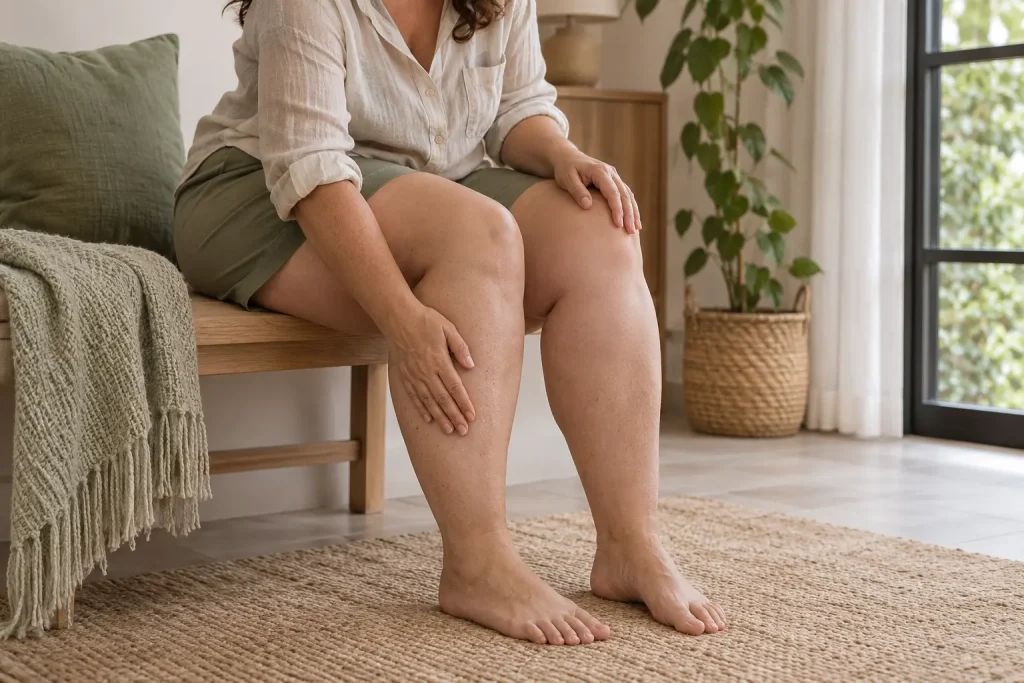
What is lipedema and what are its symptoms?
Lipedema is characterized by a disproportionate and usually symmetrical buildup of fatty tissue in the legs and, in some cases, the arms.
This buildup usually spares the feet and hands, which can create a noticeable change in contour at the ankles or wrists. This pattern helps distinguish lipedema from other causes of swelling. Some conditions can also occur together.
Lipedema affects how people feel and move as well as how their limbs look. Signs and symptoms may include the following.
- Pain or increased sensitivity to touch
- A feeling of heaviness or tightness
- Easy bruising
- A disproportion between the limbs and the torso
- Swelling or a feeling of swelling
- A gradual loss of mobility in some cases
Symptoms differ from person to person. Some people mainly experience pain and tenderness. Others are more affected by heaviness, swelling, or difficulty with everyday activities.
Lipedema and obesity are distinct conditions that can occur together. Attributing lipedema symptoms to a lack of willpower or to someone’s lifestyle oversimplifies the condition.
💡 Did you know?
In lipedema, the buildup of fatty tissue usually spares the feet. This can sometimes create a distinct change in the shape of the leg at the ankle. A healthcare professional considers this clue alongside the pattern of fat distribution and the person’s symptoms.
What causes lipedema?
The exact causes of lipedema are still unknown.
Researchers are exploring several possibilities, including a family predisposition, hormonal factors, changes in fatty tissue, fragility of small blood vessels, and interactions with the lymphatic system.
Lipedema mainly affects women and may first appear or change during periods of hormonal change, such as puberty, pregnancy, or menopause. These observations have prompted researchers to look more closely at the possible role of hormones.
Lipedema primarily affects fatty tissue. Hormones are one of several factors under investigation. The lymphatic system can also be involved, particularly when secondary edema develops.
The precise mechanisms behind lipedema remain unclear.
How is lipedema diagnosed?
A blood test, biomarker, or imaging scan alone cannot currently confirm lipedema.
Diagnosis is based mainly on the person’s medical history and a physical examination. The healthcare professional looks at several factors.
- The distribution of fatty tissue
- Whether both sides are affected in a similar way
- Tenderness or pain
- A tendency to bruise easily
- Any signs of edema
- How symptoms have changed over time
- The impact on mobility and quality of life
Additional tests may be ordered to look for another cause of swelling or identify a related condition. Lipedema is diagnosed clinically after considering and ruling out the main conditions that can resemble it.
🏃 In practice
If pain, heaviness, or tenderness in your legs persists, seek a medical assessment. Before your appointment, note when the symptoms started, what makes them better or worse, and how they affect activities such as walking or standing. This information can help guide the examination.
Lipedema, lymphedema, obesity, and cellulite: What’s the difference?
These conditions are often confused.
Lymphedema is a buildup of fluid caused by a problem with the lymphatic system. It often affects one limb and can extend to the foot or hand.
Lipedema is mainly characterized by an unusual and generally symmetrical distribution of fatty tissue. It is often accompanied by pain, tenderness, and easy bruising.
Obesity involves an overall increase in body fat. It can occur with or without lipedema.
Cellulite is very common and is distinct from lipedema.
These conditions can coexist. In more advanced cases, lipedema can also be accompanied by secondary problems with the lymphatic system. This is why photos or videos on social media are an unreliable basis for self-diagnosis.
 Common misconceptions
“If I lose weight, my lipedema will go away.”
When someone with lipedema also has overweight or obesity, weight management may improve general health and mobility. Pain and tenderness related to lipedema can persist after weight loss.
“Lymphatic drainage removes lipedema fat.”
As part of a tailored treatment plan, lymphatic drainage may help ease symptoms such as tightness or heaviness.
How does lipedema change over time?
Lipedema progresses differently from person to person. It is difficult to predict how someone’s symptoms will change over time.
The appearance of the affected areas is an imperfect guide to how much discomfort someone feels. One person may have noticeable changes in the shape of their limbs with relatively little pain. Another may experience significant pain and tenderness with subtler visible changes.
Recent guidelines and studies therefore place more emphasis on pain, heaviness, difficulty with daily activities, and quality of life alongside the appearance of the limbs.
What are the goals of lipedema treatment?
There is currently no medication that can make lipedema go away.
Treatment should be tailored to each person. Its main goals are to:
- Reduce pain and discomfort
- Ease feelings of heaviness or tightness
- Preserve mobility
- Treat any associated edema
- Improve quality of life
- Prevent some complications affecting movement or the lymphatic system
Treatment often combines several approaches based on the person’s needs. Guidance on lipedema treatment describes how decongestive therapy, compression, physical activity, and nutritional guidance can be used together. Surgery or psychological support may also be considered when needed.
Compression
Compression garments are one option for nonsurgical treatment.
Their purpose is to relieve symptoms. For some people, they may help reduce pain, tightness, or discomfort, particularly when combined with physical activity.
When choosing a compression garment, it’s important to consider the person’s body shape, skin tolerance, symptoms, and ability to wear it regularly.
Physical activity
Physical activity remains an important part of lipedema care. Lipedema and obesity can respond differently to weight-loss strategies.
Walking, cycling, swimming, exercising in water, strength training, and mobility exercises can help maintain physical function, muscle strength, and independence.
Exercise should build up gradually and be adapted to each person’s pain, mobility, and abilities. Water-based activities can be helpful because they reduce the load on the joints.
The available evidence suggests that physical activity may improve some symptoms and quality of life. So far, studies have been small and have used different methods, making their results difficult to compare.
Nutrition and weight
Following a diet alone cannot make lipedema go away. The fatty tissue affected by lipedema may respond differently to standard weight-loss strategies.
Nutrition and body composition are still relevant. When lipedema occurs alongside overweight or obesity, weight management may improve general health and mobility and ease some of the physical strain that makes movement difficult.
The available evidence is still too limited and varies too much in quality to recommend a specific diet for lipedema.
Nutritional guidance should focus on the person’s overall metabolic and nutritional health.
Manual lymphatic drainage for lipedema
Manual lymphatic drainage is often suggested for people with lipedema. It helps to understand what it can realistically achieve.
Manual lymphatic drainage is used to manage symptoms. The available evidence does not show that drainage alone can produce a lasting reduction in the fatty tissue associated with lipedema.
When appropriate and used as part of a broader treatment plan, it may help ease symptoms such as:
- A feeling of heaviness
- Tissue tightness
- Pain or tenderness
- Discomfort related to edema
- Difficulty moving or carrying out daily activities because of swelling
Manual lymphatic drainage may be particularly helpful when the lymphatic system is involved, when there is secondary edema, or when compression alone is difficult to use or provides too little relief.
Recent guidelines note that lymphatic drainage has mainly been studied in combination with other treatments. Its role is to support symptom management as part of a broader treatment plan.
A drainage session aims to relieve symptoms. The practitioner adapts the techniques to the person’s sensitivity and takes into account any edema.
The response can vary from person to person. The aim is to assess whether drainage improves comfort or eases heaviness or pain, then adjust the frequency of sessions based on the relief the person experiences.
When is liposuction considered for lipedema?
Surgery may be considered for some people whose symptoms remain significant after appropriate nonsurgical treatment.
Liposuction techniques used for lipedema aim to reduce the amount of affected fatty tissue while minimizing injury to the lymphatic system and nearby structures.
Studies have reported less pain and bruising, improved mobility, and better quality of life after surgery. In the LIPLEG randomized trial, published in 2026, participants who underwent liposuction were more likely to report relief from leg pain at 12 months than those who received nonsurgical treatment.
Surgery carries risks, and some symptoms may persist. After the procedure, some people still need compression, tailored physical activity, or ongoing care to manage their symptoms.
The decision should follow a specialist assessment and an individual discussion of the expected benefits, limitations, risks, and postoperative care.
What questions about lipedema remain open?
Researchers have learned more about lipedema, and many questions remain open.
Its exact causes are still unclear. A specific diagnostic biomarker has yet to be identified, and researchers continue to study the mechanisms behind pain, inflammation, and possible involvement of the lymphatic system.
More research is needed to compare treatments and identify who is most likely to benefit from compression, lymphatic drainage, exercise, or surgery.
Each person’s symptoms deserve attention. They should guide the choice of treatment, which should be tailored to the individual and reviewed regularly.
Key points
Lipedema is a complex condition affecting fatty tissue. It is diagnosed primarily through clinical assessment, and its course varies from person to person.
Treatment focuses on easing symptoms, preserving mobility, and improving quality of life. It may combine compression, tailored physical activity, nutritional guidance, and psychological support when needed.
When appropriate and included in a broader treatment plan, manual lymphatic drainage may help some people manage pain, heaviness, tightness, and discomfort.
Frequently asked questions about lipedema
What are the most common symptoms of lipedema?
Lipedema typically affects both legs in a similar way. It can cause tenderness to touch, a feeling of heaviness, and easy bruising. In some people, it also affects the arms. The buildup of fatty tissue usually spares the feet and hands.
How is lipedema diagnosed?
Diagnosis is based on a medical history and a physical examination. The healthcare professional assesses the distribution of fatty tissue, the pain, and how symptoms have changed over time. If needed, additional tests can help identify other causes of swelling or look for related conditions.
What is the difference between lipedema and lymphedema?
Lipedema involves a buildup of fatty tissue that is usually symmetrical. Lymphedema involves a buildup of fluid due to a problem with the lymphatic system. It can affect just one leg and extend to the foot. The two conditions can coexist.
Can losing weight make lipedema go away?
Weight loss alone does not cure lipedema. For people who also have overweight or obesity, weight management may make it easier to move and improve overall health. Pain and tenderness can persist and may require tailored care.
Can manual lymphatic drainage relieve lipedema symptoms?
When appropriate, manual lymphatic drainage can be part of a treatment plan to ease symptoms such as heaviness or tightness. Evidence for its effectiveness on its own is limited. Its role as a complementary treatment depends on the person’s symptoms.
This blog article does not aim to generate new knowledge; it is based on the reading of scientific publications, blog articles and other texts.
Sources:
S1 guidelines: Lipedema Stefanie Reich‐Schupke. JDDG Journal der Deutschen Dermatologischen Gesellschaft. 2017. [DOI](https://doi.org/10.1111/ddg.13036)
Lipedema—Pathogenesis, Diagnosis, and Treatment Options Philipp Kruppa. Deutsches Ärzteblatt international. 2020. [DOI](https://doi.org/10.3238/arztebl.2020.0396)
Rare adipose disorders (RADs) masquerading as obesity Karen L Herbst. Acta Pharmacologica Sinica. 2012. [DOI](https://doi.org/10.1038/aps.2011.153)
Definition, Epidemiology and Pathophysiology of Lymphoedema. Erich Brenner. Cells. 2025. [DOI](https://doi.org/10.3390/cells14241955)
Lipedema: What we don’t know R.F.D van la Parra. Journal of Plastic Reconstructive & Aesthetic Surgery. 2023. [DOI](https://doi.org/10.1016/j.bjps.2023.05.056)
Lipedema World Alliance Delphi Consensus-Based Position Paper on the Definition and Management of Lipedema: Results from the 2023 Lipedema World Congress in Potsdam. Philipp Kruppa. Nature communications. 2026. [DOI](https://doi.org/10.1038/s41467-025-68232-z)
Lipedema: A Call to Action! Giacomo Buso. Obesity. 2019. [DOI](https://doi.org/10.1002/oby.22597)
Objective measures of physical activity and physical capacities in lipedema – a scoping review. Ida Åström Malm. BMC women’s health. 2026. [DOI](https://doi.org/10.1186/s12905-026-04271-y)
Exercise training in women with lipedema – A systematic review. Stefano Lanzi. VASA. Zeitschrift fur Gefasskrankheiten. 2026. [DOI](https://doi.org/10.1024/0301-1526/a001250)
The Role of Physical Exercise as a Therapeutic Tool to Improve Lipedema: A Consensus Statement from the Italian Society of Motor and Sports Sciences (Società Italiana di Scienze Motorie e Sportive, SISMeS) and the Italian Society of Phlebology (Società Italiana di Flebologia, SIF) Giuseppe Annunziata. Current Obesity Reports. 2024. [DOI](https://doi.org/10.1007/s13679-024-00579-8)
Clinical or cultural? Dietary interventions for lipedema: a systematic review Jônatas de Oliveira. Maturitas. 2025. [DOI](https://doi.org/10.1016/j.maturitas.2025.108716)
A randomised controlled multicentre investigator-blinded clinical trial comparing efficacy and safety of surgery versus complex physical decongestive therapy for lipedema (LIPLEG) Maurizio Podda. Trials. 2021. [DOI](https://doi.org/10.1186/s13063-021-05727-2)
Liposuction as a Treatment for Lipedema: A Scoping Review Maria Bejar-Chapa. Plastic & Reconstructive Surgery Global Open. 2024. [DOI](https://doi.org/10.1097/gox.0000000000005952)
Podda M, et al. Liposuction versus conservative therapy for patients with lipoedema in Germany: a multicentre, randomised controlled clinical trial. The Lancet. 2026. [PubMed](https://pubmed.ncbi.nlm.nih.gov/42692034/)