Padel injuries: how to prevent them and return to play with confidence
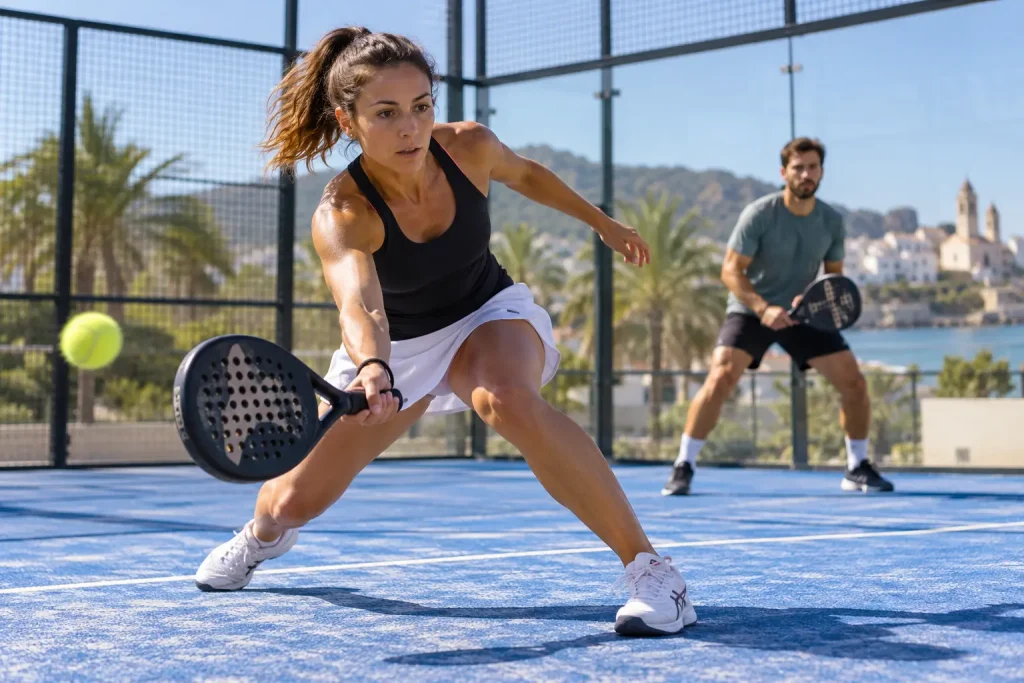
Padel has become one of the most popular sports in Spain. It’s fun, social and relatively easy to get started. However, behind this apparent simplicity lies a physically demanding sport involving acceleration, sudden stops, changes of direction and repetitive movements.
Have you started experiencing elbow pain after several matches? Does your shoulder hurt when you hit an overhead shot? Have you felt a sudden pull in your calf while trying to reach the ball?
Padel-related injuries are relatively common, particularly when we increase the intensity or frequency of play too quickly. Fortunately, many injuries can be prevented or managed through appropriate physical preparation, sensible training load management and individualised treatment.
In this article, we explain the most common padel injuries, how to reduce your risk and what you can do to return to the court with confidence.
Why do injuries occur when playing padel?
Although padel is not generally considered a contact sport, it places considerable demands on the musculoskeletal system.
During a match, we perform numerous lateral movements, short accelerations, sudden stops and rotational movements. These demands are combined with repeated racket strokes, particularly overhead shots.
However, these movements do not necessarily cause injuries.
Our bodies are designed to adapt to different physical demands. Problems may arise when the demands of the game temporarily exceed the capacity of our muscles, tendons and joints to adapt.
Imagine starting with one padel match per week and, after discovering how enjoyable it is, quickly increasing to four matches a week. Even if you feel physically fit, your muscles and tendons may need more time to adapt to this increase in activity.
Fatigue, insufficient physical preparation, sudden changes in training load and inefficient technique may also contribute to the development of pain or discomfort.
💡 Did you know?
An injury does not necessarily mean that you have performed a movement incorrectly. In many cases, the problem is related to the amount of accumulated physical stress and your body’s capacity to tolerate it.
What are the most common padel injuries?
Available research primarily identifies injuries affecting the elbow, shoulder, knee, ankle and lower back.
Muscle and tendon problems are particularly common, although their distribution varies depending on age, playing level, training frequency and the characteristics of the players studied.
Elbow pain: the famous “tennis elbow”
One of the best-known conditions among padel players is lateral elbow tendinopathy, commonly referred to as tennis elbow or lateral epicondylalgia.
It is characterised by pain on the outside of the elbow, particularly when gripping objects, lifting weights or performing certain racket strokes.
This condition is often associated with the capacity of the wrist extensor tendons to tolerate repetitive loading.
A rapid increase in the number of matches, a technique that places excessive demands on the forearm or a racket that is difficult to control may contribute to overloading this area.
Treatment is not simply a matter of resting until the pain disappears. In many cases, temporarily modifying activity and introducing progressive strengthening exercises are important steps towards restoring the ability to tolerate physical demands.
Shoulder pain: overhead shots and repetitive movements
Smashes, bandejas and víboras require fast, coordinated shoulder movements.
When these movements are repeated frequently, particularly by players who are not accustomed to them, discomfort involving the rotator cuff tendons may develop.
Pain often occurs when raising the arm, performing overhead shots or, in some cases, during certain everyday activities.
Contrary to popular belief, this does not necessarily mean that a tendon is torn or that a joint is out of alignment.
In many cases, improving shoulder muscle capacity, temporarily adjusting the number of shots performed and working on technique can help progressively restore function.
Ankle and knee injuries: changes of direction and sudden stops
Padel requires players to react quickly to unpredictable ball trajectories.
Lateral movements, turns and sudden stops place considerable demands on the lower limbs.
Ankle injuries mainly include sprains, which may occur when landing awkwardly or changing direction suddenly.
Knee discomfort may develop in response to repetitive loading, particularly during bending movements, acceleration and changes in foot position.
After an ankle sprain, simply restoring mobility is usually not enough. It is also important to work on strength, balance and the ability to react to unexpected movements.
In certain cases, temporarily wearing an ankle brace or using functional taping may help reduce the risk of another sprain.
Calf muscles and Achilles tendon: be careful with acceleration
Have you ever felt a sudden sharp pain in your calf while trying to reach a ball?
The calf muscles and Achilles tendon play a crucial role in acceleration, jumping and sudden stops.
When we rapidly increase the intensity of play, these structures may be exposed to greater demands than they are accustomed to.
Calf muscle injuries often occur during explosive movements, while Achilles tendinopathy may cause pain or stiffness, particularly when starting to move after a period of rest.
Recovery depends on the type and severity of the injury but usually involves progressive strengthening exercises, followed by faster movements and activities specific to padel.
Lower back pain: are rotational movements dangerous?
During a padel match, the spine is constantly involved in bending, extending and rotational movements.
However, twisting your back is not inherently dangerous.
Our spine is designed to move and adapt to different physical demands.
Lower back discomfort may develop when intense physical demands accumulate, particularly if a player is not accustomed to them or lacks the physical capacity required by the game.
Treatment generally focuses on maintaining tolerable levels of activity, rebuilding confidence in movement and progressively improving physical capacity.
Systematically avoiding rotational movements or trying to keep your back rigid throughout a match is generally neither necessary nor particularly helpful.
How can you reduce the risk of padel injuries?
1. Spend 10–15 minutes warming up
Arriving on court and immediately starting an intense match is not the best way to prepare your body.
A progressive warm-up allows your body to transition from rest to increasingly demanding movements.
You can start with gentle movements and dynamic mobility exercises for your shoulders, hips and ankles. Then introduce lateral movements, short accelerations and controlled stops.
Finish with a few padel-specific shots, gradually increasing the intensity.
The aim is not to perform a complicated routine, but to prepare your body for the physical demands ahead.
Although research specifically examining warm-up routines in padel remains limited, this approach is consistent with general recommendations for sports preparation.
2. Gradually increase how often you play
One of the most common mistakes among recreational players is increasing the number of matches too quickly.
The enthusiasm to improve can lead us from playing once a week to stepping onto the court almost every day.
However, muscles and tendons need time to adapt.
If you want to play more often, try gradually increasing the frequency, duration or intensity of your sessions, rather than changing all these factors at once.
It is also important to consider your overall training load, including matches, practice sessions, gym workouts and other sporting activities.
🏃 In practice
If you currently play once a week and want to increase to three matches, introduce the additional sessions gradually and pay attention to how your body responds.
There is no universal rule for how much you should increase your activity each week. Progression should be adapted to your experience, fitness level, recovery and any discomfort you may experience.
3. Train off the court too
Playing padel improves certain aspects of physical fitness, but it does not always provide all the stimuli needed to develop well-rounded physical conditioning.
A complementary programme focusing on strength, balance and coordination can help you better tolerate the demands of the game.
Your leg muscles need to generate force during acceleration and absorb it when slowing down. Your shoulders and forearms must tolerate repeated racket strokes, while your trunk helps transfer forces between your upper and lower limbs.
You don’t need to spend hours in the gym to get started.
A simple 15-minute routine, performed twice a week, could include:
- Squats or sit-to-stand exercises to strengthen your legs.
- Calf raises to strengthen your calf muscles and load the Achilles tendon.
- Single-leg balance exercises, progressing towards more dynamic movements.
- Shoulder strengthening exercises using resistance bands or dumbbells.
- Forearm and wrist strengthening exercises.
The difficulty should be adapted to your fitness level and increased progressively.
As you progress, you can introduce jumping, lateral movements and deceleration exercises to prepare for more padel-specific movements.
4. Improve your playing technique
Good technique can help you control your racket more effectively, coordinate your movements and distribute physical demands during shots.
For example, trying to generate all the power for a smash using only your arm may be more demanding than coordinating your legs, trunk and shoulder effectively.
This does not mean that there is a perfect technique capable of preventing every injury.
However, working with a coach can be particularly helpful if you experience recurring discomfort during certain shots or are progressing to a higher level of play.
Shoes and rackets: can equipment prevent injuries?
Choosing appropriate equipment can improve comfort, stability and how you feel on the court.
However, it is important to remember that no particular shoe or racket has been proven to prevent padel injuries on its own.
Research specifically examining padel equipment remains limited and does not currently support universal recommendations.
How to choose the right padel shoes
Unlike shoes designed primarily for running in a straight line, footwear used in racket sports needs to accommodate frequent lateral movements.
When choosing your shoes, several factors are worth considering.
Lateral stability is important for changing direction comfortably. Your heel and midfoot should feel securely supported without the shoes being excessively rigid or uncomfortable.
The outsole should be suitable for the court surface, providing adequate grip without creating a sensation of getting stuck during rotational movements.
It is also important to have enough room for your toes while preventing your foot from sliding inside the shoe.
The amount of cushioning you prefer will depend on your individual preferences, body weight and how the shoes feel during play.
Finally, regularly check the outsole for wear and replace your shoes when they no longer provide adequate grip or stability.
💡 Common myth
“The more grip a shoe provides, the better.”
Not necessarily. The interaction between the outsole and the playing surface is complex. Adequate grip can improve control, but excessive traction may also alter the forces acting on the body during certain turns.
The key is to find comfortable footwear suited to the court surface, without assuming that a particular model will prevent injuries.
How to choose a padel racket
The weight, shape, balance and stiffness of a padel racket can influence how it feels during play and the effort required to perform certain shots.
For beginners, a manageable racket that is easy to control is generally a reasonable choice.
Round-shaped rackets typically offer a larger sweet spot and are more forgiving when the ball does not make contact exactly in the centre.
Teardrop- and diamond-shaped rackets may offer different characteristics in terms of power and control, although their performance also depends on weight distribution and the materials used.
A heavier racket is not necessarily harmful, just as a lighter racket does not guarantee freedom from discomfort.
Your choice should take into account your playing level, technique, strength, personal preferences and any existing discomfort.
It is also worth considering grip thickness and the number of overgrips, aiming for a comfortable hold that does not require excessive gripping force.
If you experience recurring elbow or shoulder pain, it may be helpful to review your racket, playing technique and training frequency together.
I have pain when playing padel: should I stop?
Not necessarily.
Experiencing pain does not automatically mean that you have a serious injury or that you need to stop all physical activity.
For many muscle or tendon-related problems, temporarily reducing the intensity, duration or frequency of play may be enough to start improving.
For example, if elbow pain develops after several matches, it may be reasonable to reduce the number of sessions, temporarily avoid the most painful shots and begin an appropriate exercise programme.
This approach is known as relative rest.
It involves modifying activities that clearly aggravate symptoms while maintaining those that your body can tolerate comfortably.
Prolonged complete rest is generally unnecessary for many musculoskeletal injuries and, in some cases, may make it harder to regain strength and physical capacity.
However, a significant acute injury, suspected muscle tear or possible fracture requires a different assessment and management approach.
💡 Did you know?
Pain does not always directly reflect the amount of damage present in a tissue.
This is why a thorough clinical assessment considers much more than just pain intensity.
What treatments work for padel injuries?
Treatment depends on the affected structures, the severity of the injury and the individual needs of each player.
There is no single treatment technique that works for every sports injury.
Ankle sprains
For many mild to moderate ankle sprains, treatment involves functional support, a gradual return to weight-bearing activities and exercises to restore mobility, strength and balance.
Prolonged immobilisation is generally unnecessary for mild injuries, although severe sprains may require a short period of immobilisation and a specific medical assessment.
Rehabilitation should progressively prepare the ankle for running, jumping and changing direction again.
Elbow, shoulder and Achilles tendinopathies
For tendinopathies, treatment usually focuses on adapting activities and progressively improving the ability of the tendon and surrounding muscles to tolerate physical demands.
Strengthening exercises play an important role, although their selection and progression should be tailored to each individual.
Physiotherapy may also include pain education, advice on managing training loads and complementary treatments when appropriate.
Passive treatments may help relieve certain symptoms, but they should not routinely replace active rehabilitation.
Muscle injuries
Muscle injuries require a rehabilitation programme adapted to their severity.
After the initial phase, the aim is to restore mobility, strength and the ability to perform fast movements.
For example, after a calf muscle injury, being able to walk without pain is not enough. Before returning to competitive play, it may be necessary to regain the ability to accelerate, decelerate and perform repeated explosive movements.
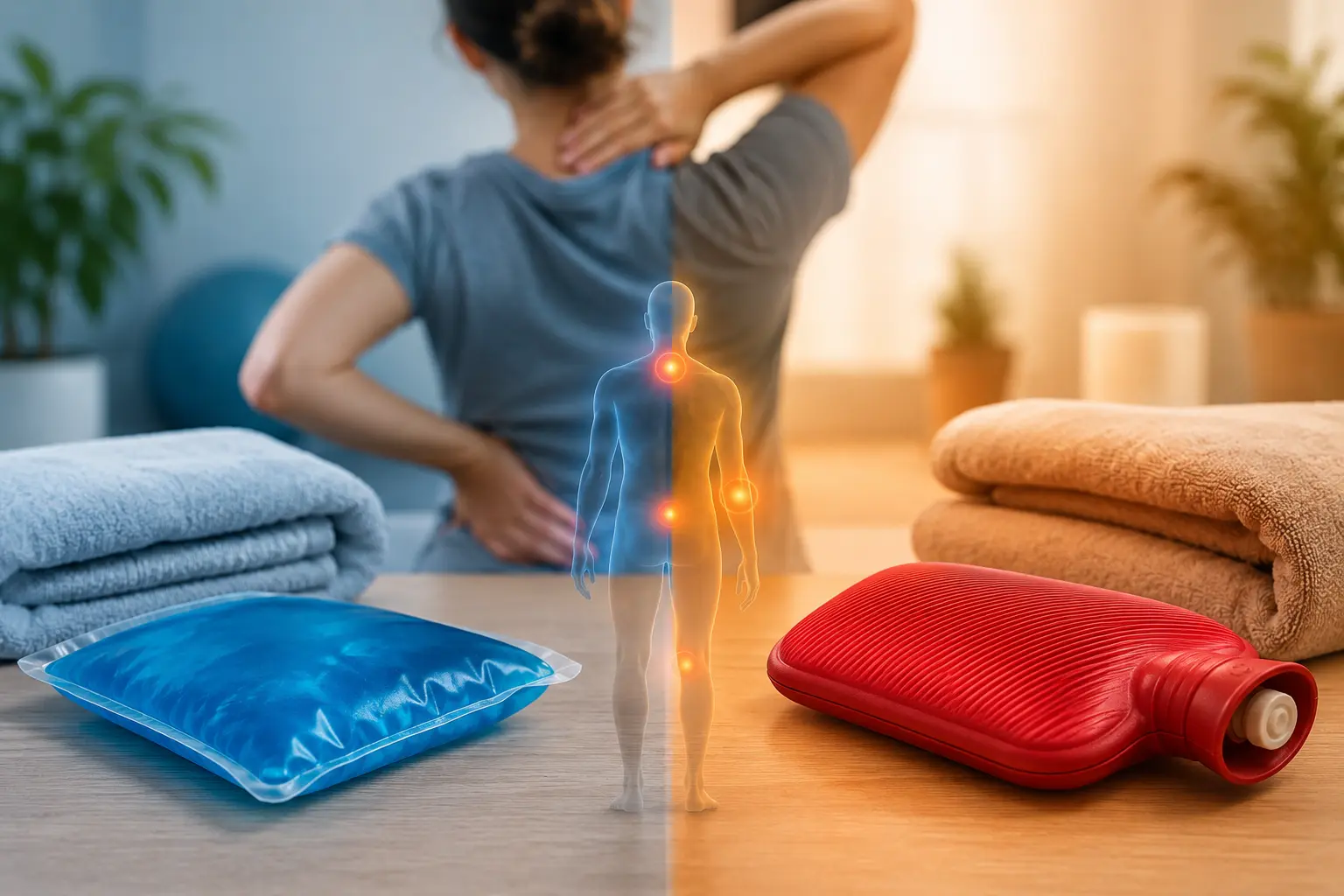
Is it better to apply ice or heat?
Cold therapy may provide temporary relief after certain acute injuries, while heat can feel soothing for some types of muscular discomfort.
However, neither ice nor heat is a complete treatment on its own.
The choice depends on the type of injury, the stage of recovery and individual preferences.
The most important factor is usually establishing an appropriate strategy for movement, recovery and the gradual return to activity.
When should you see a healthcare professional?
Although many padel-related aches and pains improve with temporary adjustments to activity, some situations require professional assessment.
It is advisable to seek professional advice if your pain persists, progressively worsens or limits your usual activities.
An assessment is also recommended if your symptoms return every time you resume playing or if you have experienced repeated sprains in the same joint.
Following an injury, seek prompt medical attention if you cannot bear weight on your foot, notice a visible deformity, experience significant swelling or develop a marked loss of strength or mobility.
A sudden loss of strength accompanied by a popping sensation, particularly around the Achilles tendon, also requires urgent medical assessment.
You do not need to wait until pain becomes disabling before seeking advice. An early assessment can help you understand what is happening and how to adapt your activities.
Sports physiotherapy and osteopathy in Sitges: how can Aliantis help?
At Aliantis, we believe that treating a sports injury involves more than simply focusing on the painful area.
Our aim is to understand the factors that may be contributing to your symptoms and help you regain the physical capacity needed to enjoy your sport.
During your assessment, we examine your symptoms, mobility, strength and the activities that trigger discomfort. We also consider your sporting experience, how often you play and any recent changes in your training routine.
Depending on your needs, we may combine pain education, advice on adapting your activities, therapeutic exercises and manual therapy techniques when appropriate.
Physiotherapy plays an important role in recovering from muscle, tendon and joint injuries.
Osteopathy can contribute to the assessment and management of certain musculoskeletal problems, particularly through an individualised approach that incorporates movement and functional recovery.
In both cases, we prioritise active, progressive rehabilitation while avoiding unnecessary dependence on treatment.
Our goal is not simply to relieve your pain, but to help you regain the confidence and physical abilities needed to enjoy playing padel again.
When can I return to padel after an injury?
Returning to padel should not depend solely on whether your pain has disappeared.
It is also important to consider mobility, strength, stability and your ability to perform movements specific to the sport.
For example, after an ankle sprain, being able to walk comfortably is a good starting point, but it does not necessarily mean you are ready for intense decelerations or sudden changes of direction.
Similarly, after a shoulder tendinopathy, it may be necessary to progressively rebuild your tolerance to overhead shots.
A sensible return to padel may begin with gentle movements and controlled shots, progress to moderate-intensity training sessions and eventually lead to full matches.
This progression should be adapted to the type of injury and your individual response.
No siempre es imprescindible estar completamente libre de cualquier molestia, pero el dolor no debería ser intenso ni acompañarse de una pérdida importante de función o un empeoramiento progresivo.
🏃 In practice
Before returning to competitive play, ask yourself:
Can I perform my usual movements without significant pain? Have I regained enough strength? Can I accelerate, decelerate and change direction confidently? How does my body respond in the hours following exercise?
Your answers, together with a professional assessment when necessary, can help you decide when to increase the intensity of your activity.
Conclusion: enjoy padel by preparing your body for the game
Padel is an excellent way to stay active, improve your physical fitness and enjoy sport with others.
Although injuries are a possibility in any sport, many can be managed through appropriate physical preparation, sensible progression of training loads and individualised rehabilitation.
You do not need perfect technique, an expensive racket or to avoid certain movements to look after your body.
What matters is progressively developing the physical capacity needed to meet the demands of the game.
Frequently asked questions about padel injuries
What are the most common padel injuries?
The most commonly reported padel injuries affect the elbow, shoulder, knee, ankle and lower back. Calf muscle injuries and Achilles tendinopathies are also relatively common. Their frequency varies depending on playing level and individual player characteristics.
How can I prevent tennis elbow when playing padel?
What are the best shoes for playing padel?
Can a heavy padel racket cause elbow pain?
Can I play padel if I have lower back pain?
When should I see a physiotherapist for a padel injury?
This blog article does not aim to generate new knowledge; it is based on the reading of scientific publications, blog articles and other texts.
Sources:
García-Fernández P. et al. (2023). Injuries in Padel Players: A Systematic Review. Revisión sistemática sobre la epidemiología y las características de las lesiones relacionadas con el pádel. PMID: 37337550.
Estudio epidemiológico sobre lesiones de pádel (2023). Investigación observacional sobre la distribución anatómica y los factores asociados a las lesiones en jugadores de pádel. PMID: 37791828.
Investigación sobre características de las palas y lesiones (2022). Estudio observacional sobre la relación entre las características del material y las molestias musculoesqueléticas en jugadores de pádel. PMID: 36554736.
Estudio sobre equipamiento y lesiones en pádel (2016). Investigación observacional sobre factores asociados a las lesiones, incluido el calzado deportivo. PMID: 27627991.
Martin RRL et al. (2021). Ankle Stability and Movement Coordination Impairments: Lateral Ankle Ligament Sprains Revision 2021. Journal of Orthopaedic & Sports Physical Therapy, 51(4), CPG1–CPG80.
de Vos RJ et al. (2021). Dutch multidisciplinary guideline on Achilles tendinopathy. British Journal of Sports Medicine, 55, 1125–1134.
Blanpied PR et al. (2017). Clinical Practice Guidelines Linked to the International Classification of Functioning, Disability and Health From the Orthopaedic Section of the American Physical Therapy Association: Low Back Pain. Referencia complementaria sobre el abordaje activo del dolor musculoesquelético.