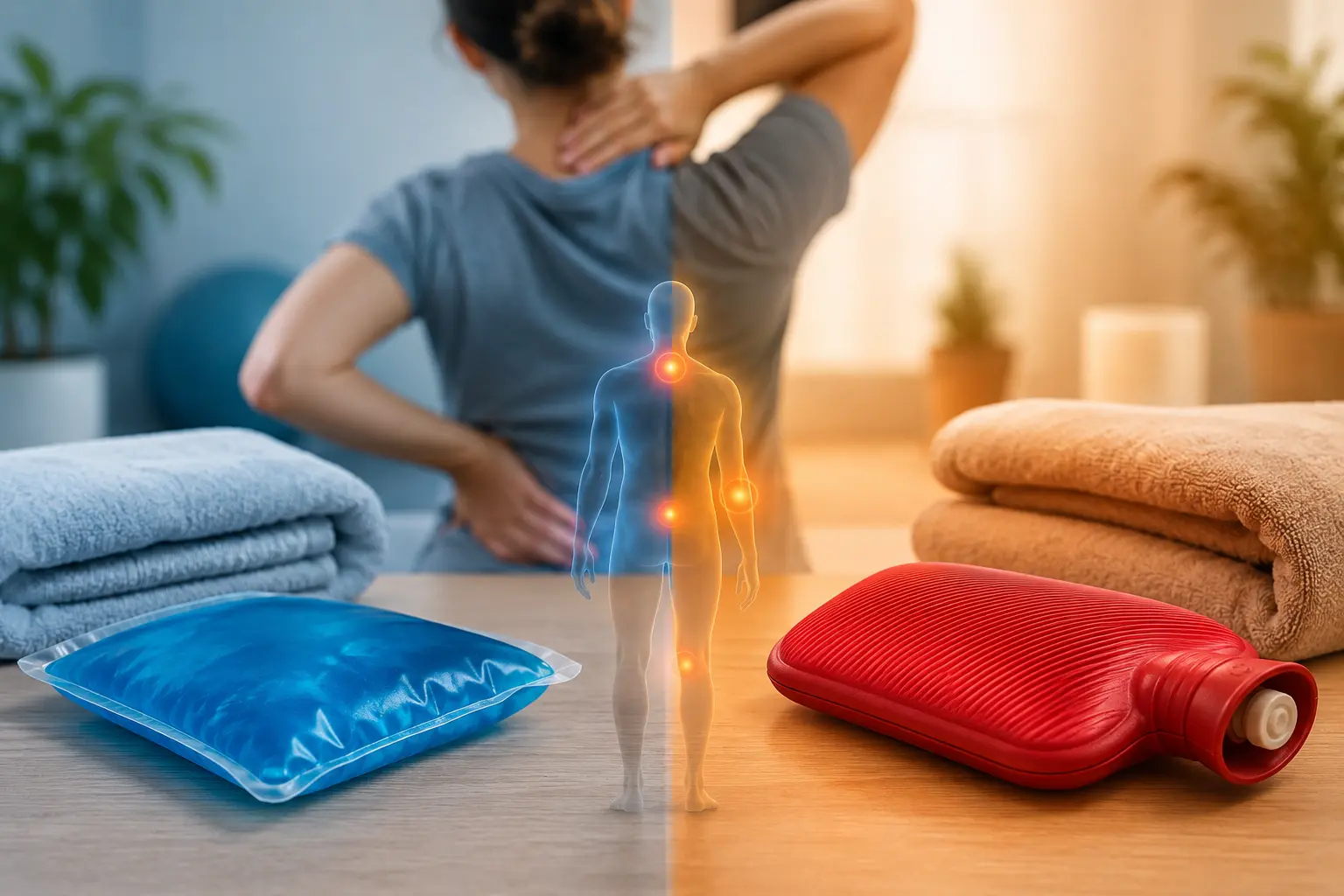
Is there a good sitting posture?
The best posture is the one you change often.
We have all heard this sentence before: “Sit up straight.” As if the back needed one ideal, perfectly aligned posture that we should maintain all day to avoid pain. And yet, the human body does not work exactly like that.
Yes, posture matters. A poorly adjusted chair, a screen that is too low or shoulders that are constantly tense can create discomfort. But the most important question is not only: “Am I sitting well?” It is also: “How long have I been still?”
Because even a posture considered “good” can become uncomfortable if it is held for too long. And, on the other hand, an imperfect posture can be very well tolerated if it is changed regularly. The body likes variety. It likes moving from sitting to taking a few steps, changing support points, and alternating moments of concentration with small active breaks.
The best sitting posture is therefore not a fixed position. It is a comfortable posture, adapted to your body and your environment, that you do not hold for too long.
Sitting: what are we really talking about?
In public health recommendations, we often talk about “sedentary behaviour”. This term refers to moments when we are awake, but the body uses very little energy: working on a computer, driving, reading, watching television, using a phone or spending long periods in meetings.
The problem is not the chair itself. The real issue is prolonged immobility.
Today, international recommendations increasingly emphasize the importance of limiting sedentary time and replacing it, whenever possible, with movement, even light movement. This does not necessarily mean doing sport between two appointments. Standing up, walking for a few minutes, changing posture or getting a glass of water: these small actions matter more than we often think.
The goal is not to make people who work sitting down feel guilty. In many professions, spending several hours a day in front of a screen is difficult to avoid. But we can organize the day so that we do not remain stuck in the same position for too long.
The myth of perfect posture
The idea of a perfect posture is attractive, but it raises two problems.
First, it cannot be the same for everyone. We do not all have the same height, mobility, body shape, history of pain, or level of fatigue and stress. A comfortable position for one person may be uncomfortable for another.
Second, trying to stay “perfectly upright” all day can create unnecessary tension. Some people constantly straighten themselves, tighten their shoulders, clench their jaw and block their breathing. By trying too hard to do it right, they often end up feeling more tired.
A useful posture is not a rigid posture. It is a position in which you can breathe easily, keep your shoulders relaxed, feel comfortable support points and move without effort.
We could say that a good posture is not the one that looks impressive from the outside, but the one your body tolerates well from the inside.
Simple adjustments that really help
Even though there is no magic position, a few reference points can make sitting more comfortable, especially if you work long hours at a desk.
Ideally, your feet should rest on the floor, or on a small support if the chair is too high. Your knees and hips can be at a similar height, without looking for a perfect angle. The pelvis is often better supported when it is placed towards the back of the chair, rather than balanced on the edge of the seat.
If your chair has a backrest, use it. Many people sit without ever leaning back, as if the back had to support everything on its own. A small lumbar cushion can also help in some cases, especially if it allows the muscles to relax instead of contract.
The shoulders are a good indicator. If they rise towards the ears, if the trapezius muscles tense up or if the neck starts to feel stiff, it is often a sign that the workstation needs some adjustment.
The screen, for its part, should be positioned in a way that avoids spending hours with the head pushed forward. It is not always necessary to buy expensive equipment. Raising the screen with a few books, using a separate keyboard or placing the mouse better can already make a big difference.
The goal is not to create a perfect desk. The goal is to reduce unnecessary tension so that your body has more freedom.
The real problem: staying still for too long
An ergonomic chair can help. A good screen can help. A better desk setup can help. But if you stay still for two or three hours without interruption, your body will probably end up letting you know.
Research on sedentary behaviour shows that regular breaks can have interesting effects, particularly on certain short-term metabolic markers. Interrupting sitting with light walking seems especially useful.
But be careful: replacing an entire day of sitting with an entire day of standing still is not necessarily the solution. Standing for a long time without moving can also cause pain, muscle fatigue or circulation problems in some people.
The key is therefore not “sitting or standing”. The key is alternation.
Sit down, stand up, take a few steps, sit down again. Change support points. Move your shoulders. Breathe more deeply. Return to work. These simple transitions are often more realistic, and more effective, than a major ergonomic revolution that is impossible to maintain.
Micro-breaks: a small habit that can make a big difference
In real life, advice needs to be simple. A good starting point is to stand up regularly, for example every 30 to 60 minutes, and move a little.
It can be very short: two to five minutes are sometimes enough to restart circulation, change support points and reduce the feeling of stiffness. If every 30 minutes feels unrealistic, start with a break every hour. The most important thing is to find a rhythm you can truly maintain.
A micro-break does not require sports clothes. You can refill a water bottle, take a phone call standing up, walk gently around the room, do a few sit-to-stand movements from your chair, go up one floor or simply open your shoulders and move your neck gently.
The best movement is often the one you can integrate effortlessly into your daily life.
What if you have back or neck pain?
When the back or neck hurts, it is normal to look for “the” right posture. Pain makes us want to control, protect and avoid the wrong movement.
But in many situations, the solution is not to find a perfect chair or a posture to hold at all costs. It is more about gradually increasing movement variety, reducing prolonged positions and adapting the environment so that the body feels less threatened.
Active breaks and posture changes can be especially useful for people who work long hours at a desk. They do not replace a professional assessment when pain is significant, but they are often part of the simple habits that help reduce the frequency or intensity of discomfort.
If the pain persists, worsens, travels down the arm or leg, or is accompanied by tingling, loss of strength or other unusual symptoms, it is recommended to consult a healthcare professional.
How can Clinic Aliantis help?
When discomfort persists despite adjusting the workstation, taking regular breaks or changing posture, it can be helpful to assess the situation with a professional. At Clinic Aliantis, in Sitges, we evaluate the situation as a whole: posture, mobility, work habits, physical activity level, stress, sleep and history of pain. The goal is not simply to “correct” a position, but to understand why the body becomes sensitive and how to help it regain more comfort in daily life.
Depending on each situation, support may include osteopathy, physiotherapy, adapted exercises, simple ergonomic advice or a more global approach to persistent pain. Our approach is individualized, progressive and movement-centred, helping you regain confidence in your body and better manage the physical demands of seated work.
Conclusion: the best posture is the next one
So, is there really such a thing as a good sitting posture?
Yes, but it changes.
A comfortable position now may become uncomfortable in 45 minutes. An “upright” posture can be useful at certain moments, but exhausting if it becomes rigid. A well-adjusted chair can help, but it does not replace movement.
If you had to remember just one idea, it would be this: the body does not like prolonged immobility. It prefers variety, transitions, small breaks and regular adjustments.
The best posture is the one you do not hold for too long.
This blog article does not aim to generate new knowledge; it is based on the reading of scientific publications, blog articles and other texts.
World Health Organization 2020 guidelines on physical activity and sedentary behaviour. British Journal of Sports Medicine. 2020. DOI: 10.1136/bjsports-2020-102955
The Acute Effects of Interrupting Prolonged Sitting Time in Adults with Standing and Light-Intensity Walking on Biomarkers of Cardiometabolic Health in Adults. Sports Medicine. 2022. DOI: 10.1007/s40279-022-01649-4
Effects of an active break and postural shift intervention on preventing neck and low-back pain among high-risk office workers. Scandinavian Journal of Work, Environment & Health. 2021. DOI: 10.5271/sjweh.3949
Why do people sit? A framework for targeted behavior change. Health Psychology Review. 2022. DOI: 10.1080/17437199.2022.214385
Evaluating movement breaks as a public health strategy to mitigate the harms of prolonged sitting. British Journal of Sports Medicine. 2026. DOI: 10.1136/bjsports-2025-111221